12 exemples de modèles économiques par abonnement (et pourquoi chacun fonctionne)
Toute entreprise d'abonnement réussie est une variation de l'un des trois modèles — réapprovisionnement, curation ou accès — et chaque exemple ci-dessous est choisi parce qu'il isole un mécanisme qui vaut la peine d'être emprunté. Si vous évaluez un abonnement pour votre propre boutique, le modèle derrière l'exemple importe plus que le nom de la marque.
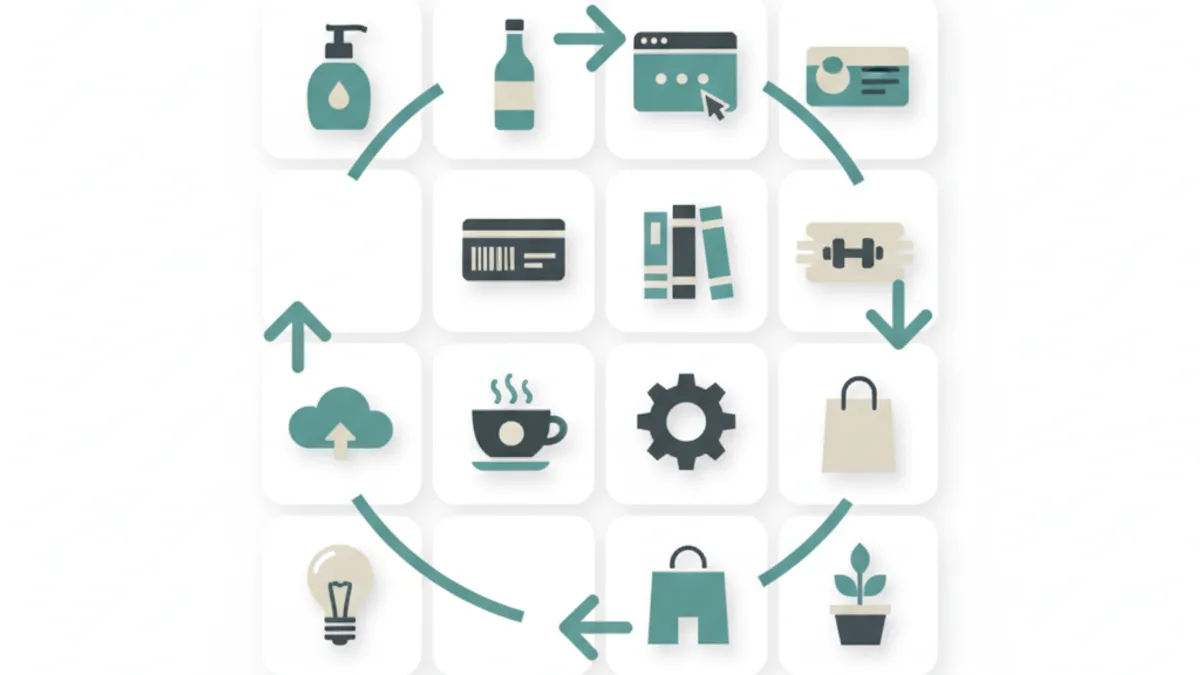
Les trois types de modèles d'abonnement avec quatre exemples chacun : réapprovisionnement (Dollar Shave Club, AG1, Chewy Autoship, abonnement café avec économies), curation (box beauté à la Birchbox, Stitch Fix, box de livres/snacks, ButcherBox), et accès (Netflix, Amazon Prime, Costco, Patreon). Le réapprovisionnement fidélise par la cadence de consommation, la curation par le plaisir par box, l'accès par l'utilisation habituelle des avantages.
Les trois types de modèles en un seul tableau
Chaque exemple de cette liste est l'un de ces trois modèles économiques par abonnement :
| Modèle | Ce qui est vendu | Moteur de rétention | Taux de désabonnement typique |
|---|---|---|---|
| Réapprovisionnement | Le même consommable, à une cadence régulière | Rythme de consommation + commodité | Faible (3–6 %/mois) |
| Curation | Un assortiment sélectionné à chaque cycle | Plaisir et découverte par box | Plus élevé (6–12 %/mois) |
| Accès / adhésion | Avantages, contenus ou statut continus | Utilisation habituelle de l'avantage | Faible lorsque l'utilisation est habituelle |
Exemples de réapprovisionnement
- Dollar Shave Club — l'histoire canonique du réapprovisionnement DTC : un consommable à faible considération (rasoirs), une cadence que tout le monde comprend, et une voix de marque qui a rendu le changement évident. Mécanisme à emprunter : proposer l'abonnement comme mode d'achat par défaut.
- AG1 (Athletic Greens) — un consommable premium vendu presque exclusivement par abonnement. Mécanisme : faire de l'*habitude* le produit — le cadre d'utilisation quotidienne donne l'impression d'arrêter une routine, et non une livraison, si l'on annule.
- Chewy Autoship — abonnement et économies superposés à un catalogue existant. Mécanisme : une remise modeste et permanente (5-10 %) ainsi qu'une flexibilité totale de la planification ; Autoship est réputé facile à sauter et à ajuster, c'est pourquoi les gens le gardent.
- Marques de café avec abonnement et économies — des milliers de torréfacteurs Shopify appliquent cette stratégie. Mécanisme : adaptation de la cadence — permettre aux abonnés d'étirer de 30 à 45 jours fidélise les ménages qui boivent plus lentement. La configuration complète se trouve dans comment démarrer une entreprise par abonnement.
Exemples de curation
- Box beauté (le modèle Birchbox) — découverte de produits en taille échantillon à un prix bas, monétisée deux fois : abonnements et achats de produits en taille réelle subséquents. Mécanisme : la box comme entonnoir vers votre propre catalogue.
- Stitch Fix — curation avec un styliste humain/algorithmique et un modèle "gardez ce que vous aimez". Mécanisme : les données de personnalisation s'accumulent — chaque retour apprend à la box suivante, augmentant les coûts de changement.
- Box de snacks et de livres — catégories de pure découverte. Mécanisme : une narration thématique mensuelle qui fait de chaque box un événement à anticiper (et à partager).
- ButcherBox — curation à l'échelle d'une épicerie. Mécanisme : économie de taille de box — une box à valeur de commande moyenne élevée (AOV) sur une cadence de 4 à 8 semaines supporte de réels coûts d'expédition qu'une box à 15 $ n'aurait jamais pu supporter. Mécanismes de la box en détail : comment démarrer une entreprise de box par abonnement.
Exemples d'accès et d'adhésion
- Netflix — l'archétype de l'accès : une bibliothèque de contenu dont le prix est bien inférieur à sa valeur à la carte. Mécanisme : l'utilisation est la métrique de rétention — les heures regardées prédisent le renouvellement, donc le produit optimise l'engagement, pas la livraison.
- Amazon Prime — une adhésion payante qui modifie le comportement d'achat. Mécanisme : le coût irrécupérable incite à la consolidation (« Je paie pour Prime, donc j'achète ici »), augmentant la fréquence sur l'ensemble du catalogue.
- Costco — la preuve pré-internet : les frais d'adhésion SONT le profit ; les marchandises sont vendues presque à prix coûtant. Mécanisme : la marge financée par les frais permet aux prix de signaler une valeur imbattable.
- Patreon — accès au travail et à la communauté d'un créateur. Mécanisme : identité — les contributeurs s'abonnent pour appartenir et soutenir, c'est pourquoi les niveaux avec reconnaissance sont plus performants que les niveaux avec seulement du contenu.
La traduction e-commerce de l'accès est l'adhésion payante à un magasin — livraison gratuite, prix membre, sorties anticipées — couverte dans abonnement vs adhésion.
Ce que les douze ont en commun
Trois schémas se répètent dans chaque exemple digne d'être copié :
- La cadence correspond à la consommation ou à l'habitude réelle. Aucun acteur à succès n'expédie plus vite que les clients ne peuvent consommer ; la flexibilité (sauter, étirer, mettre en pause) est une infrastructure de rétention, pas un luxe.
- L'abonnement est le meilleur moyen d'acheter, pas un gadget. Une réduction, une commodité ou une expérience rend l'abonnement rationnellement meilleur que l'achat unique.
- La rétention est conçue, pas seulement espérée. La récupération des paiements échoués, les sauvegardes lors de l'annulation et les bonus de fidélité apparaissent dans tous les programmes matures — la machinerie derrière la réduction du désabonnement.
Pour une boutique Shopify, le point de départ pratique est le réapprovisionnement par abonnement avec économies si votre produit est consommable, la curation si la découverte est votre valeur, et l'adhésion si vous avez un large catalogue avec des acheteurs fidèles et récurrents. RecurX gère les trois modèles — avec le portail, la relance et les mécanismes de fidélité mentionnés ci-dessus intégrés.
Questions fréquentes
Quels sont les exemples de modèles économiques par abonnement ?
Réapprovisionnement : Dollar Shave Club, AG1, Chewy Autoship. Curation : Stitch Fix, ButcherBox, box beauté et snack. Accès/adhésion : Netflix, Amazon Prime, Costco, Patreon. Chaque type vend quelque chose de différent — consommables réapprovisionnés, découverte curatée ou avantages continus.
Quels sont les trois types de modèles d'abonnement ?
Réapprovisionnement (le même consommable livré selon un calendrier), curation (un assortiment sélectionné à chaque cycle, où la découverte est le produit), et accès ou adhésion (des frais récurrents pour des avantages, du contenu ou un statut plutôt que des biens programmés).
Quel modèle d'abonnement est le plus rentable ?
Les modèles d'accès/adhésion génèrent les marges brutes les plus élevées (peu ou pas de marchandises par rapport aux frais), mais nécessitent une base engagée. Parmi les modèles de produits, le réapprovisionnement l'emporte généralement sur la curation en termes de rentabilité, car le taux de désabonnement est structurellement plus faible et les opérations plus simples — la rétention, plus que le choix du modèle, détermine le profit.
Quel modèle d'abonnement fonctionne le mieux pour une boutique Shopify ?
Adaptez le modèle au catalogue : produits consommables → réapprovisionnement avec abonnement et économies ; produits axés sur la découverte → une box curatée ; catalogues étendus avec des acheteurs récurrents fréquents → une adhésion payante avec des avantages. De nombreuses boutiques superposent deux modèles — abonnement et économies sur les SKU phares, plus une adhésion sur l'ensemble du catalogue.
Mo Boumzoud — Founder, RecurX. Mo is the founder of RecurX and writes about subscription commerce, retention, and growth for Shopify merchants. RecurX powers subscriptions for direct-to-consumer brands.
Poursuivre la lecture
- Abonnement vs. Adhésion : Quelle est la différence (et lequel vendre) ?Les abonnements et les adhésions sont tous deux facturés selon un calendrier, mais ils vendent des choses différentes — un produit versus un sentiment d'appartenance. Voici la différence pratique et comment les choisir (ou les combiner).
- Comment lancer une entreprise de box par abonnement en 2026 (étape par étape)Une box par abonnement est une entreprise de curation avec une logistique associée. Voici le chemin en 9 étapes, de l'idée de niche à l'envoi de la box, avec les chiffres d'affaires unitaires que la plupart des guides ignorent.
- Stratégie de tarification d’abonnement : 7 modèles avec exemplesSept modèles de tarification d’abonnement expliqués avec exemples, plus la méthode pour choisir le bon et tarifer selon la valeur plutôt que le coût.
Faites croître votre revenu récurrent sur Shopify
RecurX propose un plan gratuit à vie et zéro frais de transaction sur tous les paliers. Installation en quelques minutes.
Installer RecurX gratuitement →