Buy a Subscription the Smart Way: A Complete How-To Guide
Learn how to buy a subscription with confidence. Discover what to check before paying, how recurring billing and cancellation really work, and how
Learn how to buy a subscription with confidence. Discover what to check before paying, how recurring billing and cancellation really work, and how
You're about to reorder something you use every month, and the product page is pushing you to subscribe instead. Don't treat that toggle as a discount button. It's a billing agreement, and you should only accept it when you control the renewal, the price, and the exit.
Table of Contents
- The Moment Before You Buy a Subscription
- How Recurring Billing Actually Works at Checkout
- Six Things to Check Before You Subscribe
- Cancel, Pause, and Skip as Different Decisions
- When a Subscription Is Not Actually Cheaper
- How to Complete a Subscription Purchase Securely
- Questions to Ask Before You Click Subscribe
- Your Subscription Decision Framework
The Moment Before You Buy a Subscription
You're on a product page for dog supplements or vitamins, ready to check out. One option buys a single bottle. The other says subscribe, save money, and never run out. The discount is clear. Almost everything else isn't.
You don't know exactly when the next charge lands. You don't know whether you can skip a shipment from your account or whether you'll need to email support and wait. You don't know what happens if your dog stops taking the product, your skin reacts badly, or unopened boxes start stacking up in a cupboard.
That hesitation is rational. Treat it as useful information, not indecision.
What a Good Seller Shows You Up Front
A responsible merchant explains the commitment before payment, not after the first renewal surprise. If you're buying pet products, a clear note on recurring orders for dog health from PetScy is the kind of plain explanation to look for, because recurring pet care only works when the schedule matches your animal's actual use.
Before you buy a subscription, you need answers to five practical questions. How does recurring billing work. What should you verify before paying. How do cancel, pause, and skip differ. When does subscribing cost more than buying on demand. And how do you complete checkout without handing over control of future charges blindly.
Don't ask whether the subscription sounds convenient. Ask whether you can change, delay, or end it without a fight.
That's the standard to apply here. A subscription should reduce effort without reducing your choices. If the seller makes the discount easy to find but buries the exit, buy once and walk away. You can subscribe later after you've tested the product, measured how fast you use it, and confirmed the portal works. The discount will usually still be there. Your negotiating power disappears once your card is stored.
How Recurring Billing Actually Works at Checkout
A one-time purchase authorizes one charge. A subscription authorizes a schedule of future charges until you change or end it. That's the whole difference, and it's why the checkout details matter more than the headline saving.
Gym autopay works this way. You provide payment details once, agree to a billing interval, and the merchant charges you again on each renewal date. You don't re-enter your card for every order, which is convenient, but it also means inattention becomes consent.
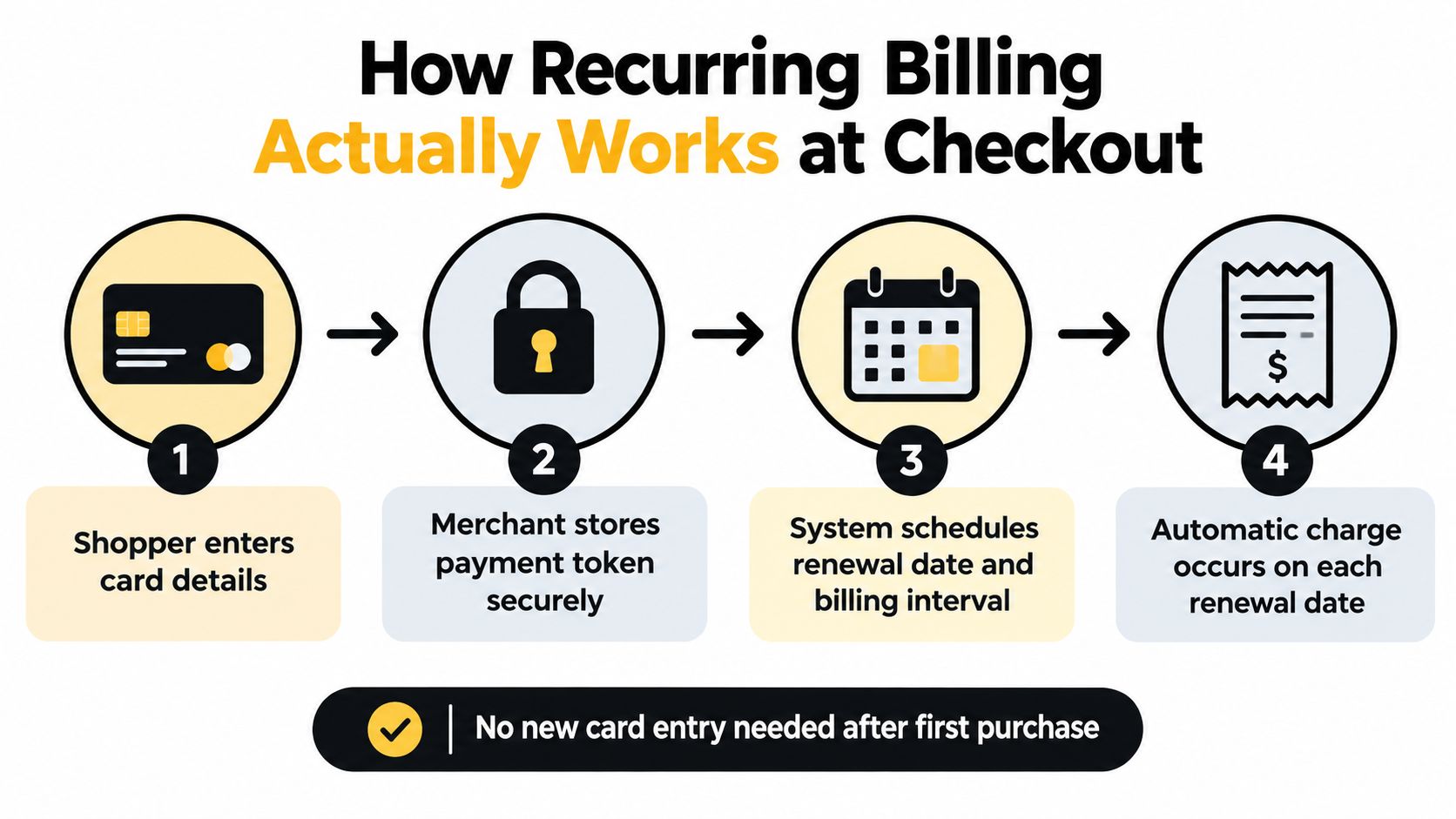
The flow below shows what happens behind that simple subscribe button.
The Four Steps You Are Approving
- Card entry: You enter payment details and select a delivery and billing interval.
- Token storage: The payment system stores a payment token, a secure reference for future charges, rather than relying on you to submit the card again.
- Scheduling: The merchant records your next renewal date, product, quantity, and price terms.
- Automatic renewal: The system charges the stored payment method and creates the next order or restores access.
Know which model you're joining. Pay as you go charges each cycle and usually offers the most flexibility. Prepaid takes payment for multiple deliveries upfront, so early cancellation and unused value matter more. A membership may charge for access, perks, or pricing benefits rather than a fixed product shipment.
Your customer portal is where control either exists or doesn't. That's where pause, skip, product swap, frequency change, card update, and cancellation should live. If those actions require a support ticket, the subscription isn't self-serve.
This isn't a niche arrangement anymore. Grand View Research estimates the worldwide subscription economy was worth USD 492.3 billion in 2024 and projects growth to USD 1.5121 trillion by 2033, a 13.3% compound annual growth rate from 2025 through 2033, according to its global subscription economy market report. At that scale, clear renewal notices and usable account controls aren't premium extras. They're baseline expectations.
Six Things to Check Before You Subscribe
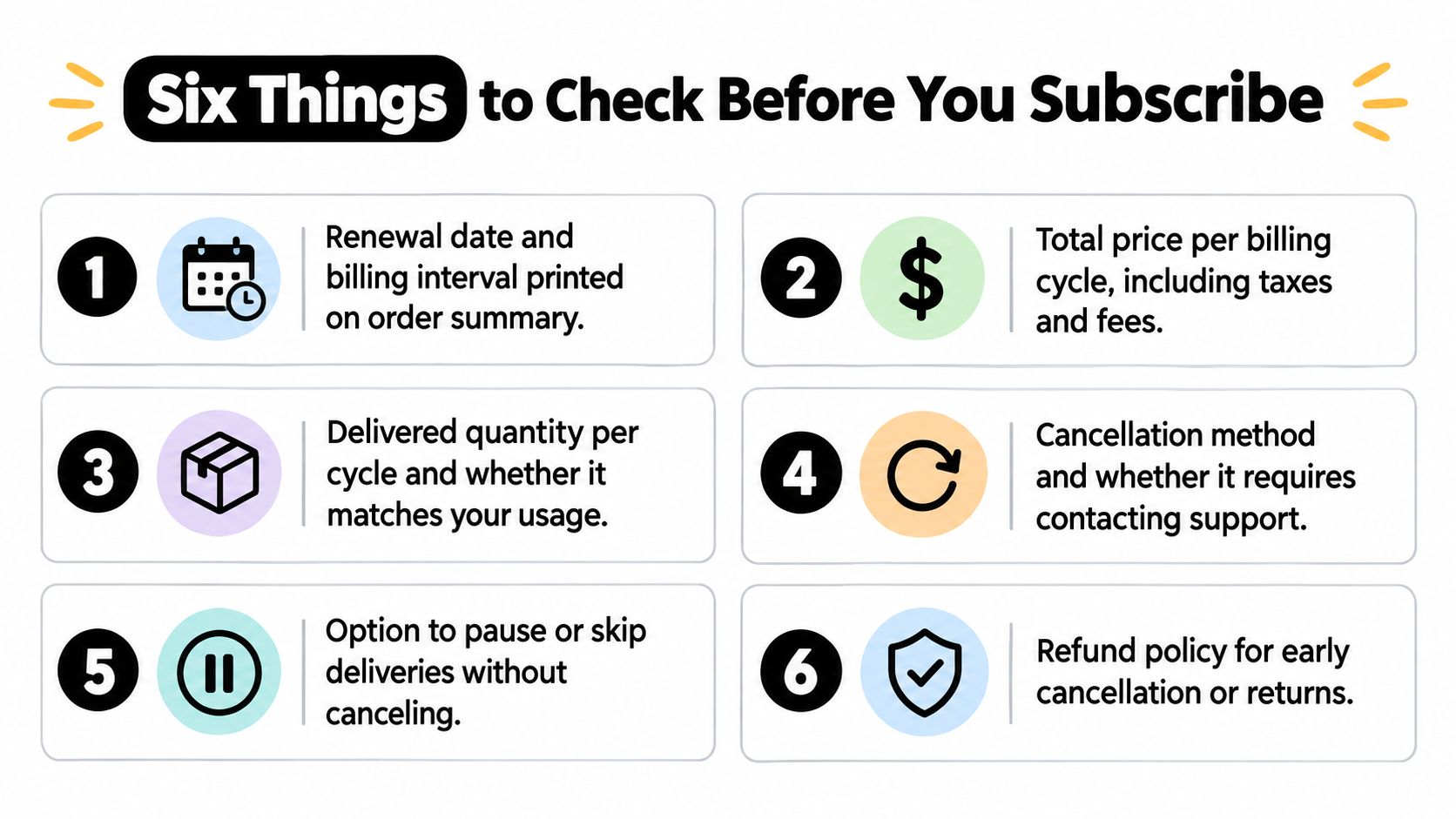
Run these checks on the product and checkout pages before you pay. Treat each one as a yes or no filter. Too many unclear answers means you buy once, not subscribe.
The Six Yes or No Filters
- Renewal date visible: Does the order summary show the billing interval and next charge date, not just delivery frequency?
- Post-intro price clear: If today's price is promotional, does the page state what you'll pay after it expires and whether the merchant warns you before price changes?
- Self-serve portal available: Can you pause, skip, swap, change frequency, update your card, and cancel from your account without contacting support?
- Refund terms defined: Does the policy cover damaged, late, wrong, or unwanted renewals, including whether you receive money back or only store credit?
- Failed payment handling explained: If a card declines, will you get a clear notice and a simple card-update link instead of a silent cancellation or repeated surprise retries?
- Notifications usable: Will reminders arrive through channels you monitor, in a language and currency you understand, before money leaves your account?
Cadence matters as much as price. If you're weighing billing periods, compare annual and monthly subscription plans before locking yourself into a longer cycle for a larger discount. Longer terms only help when your usage is predictable.
Context also changes by market. World Bank Global Findex data compiled across 142 economies show adults paying bills online ranged from 88.5% in Finland to 0.1% in Afghanistan, with 65.8% in the United States, 31.3% in Japan, and 32.9% in Italy, according to a compilation of online bill payment by country. Don't assume every checkout offers payment methods, reminders, or billing norms that fit your country.
Category research helps too. Expecting parents who compare pregnancy subscription boxes through Feed Mom & Me can see how contents and timing differ before committing. Apply that same comparison habit to supplements, coffee, skincare, and pet food. Match quantity to consumption first. Chase the discount second.
Cancel, Pause, and Skip as Different Decisions
Easier cancellation isn't a threat to a good subscription. It's often the reason cautious shoppers agree to start one. In consumer survey findings, 82% of surveyed US and UK consumers said easy cancellation makes them more likely to subscribe, 78% wanted pause-or-swap options, and 58% had paused rather than canceled when that option was available, according to a Business Wire consumer subscription survey.
Don't use these three controls interchangeably. They solve different problems.
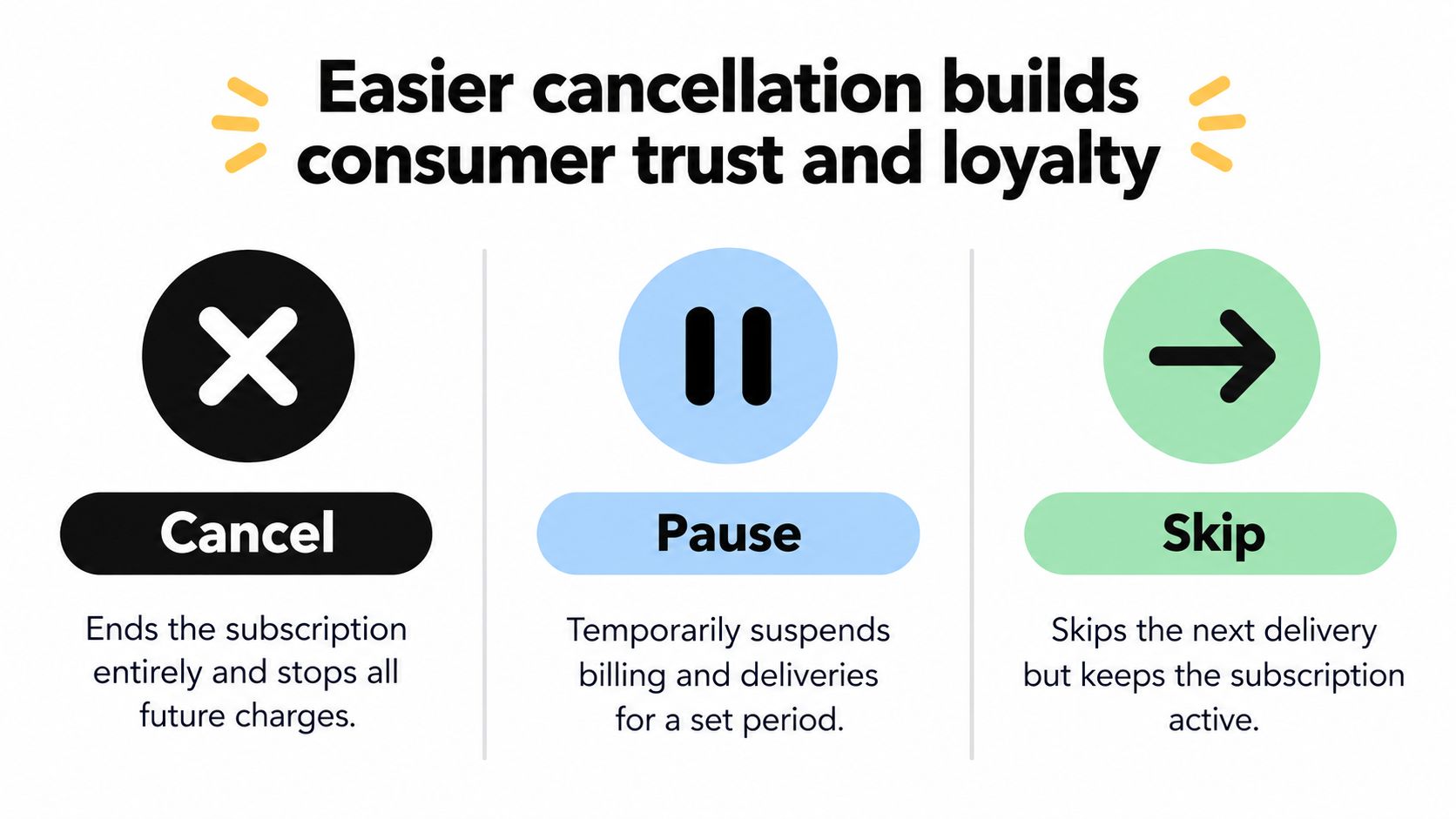
Cancel ends future billing and the relationship. Use it when the product doesn't work, the price no longer makes sense, or you don't trust the merchant. Before you cancel a prepaid plan, check what happens to unused deliveries, credits, loyalty points, and account access.
Pause stops billing and deliveries for a defined period while preserving the subscription. It's the right move for supplements you've stockpiled, skincare you're rotating, travel, or a temporary budget squeeze. Confirm whether the pause has a maximum length and whether it restarts automatically.
Skip postpones only the next delivery. Use it for coffee you didn't finish or pet food you won't need while you're away. Skipping protects the plan and pricing while correcting a short-term mismatch. But check whether skipping changes your next billing date or merely delays shipment.
Watch how these controls work in practice before you rely on them during a billing problem.
European consumers also expect the exit itself to be understandable. 85% support cancellation through a button or account settings, while 81% want the cancellation flow to explain consequences such as losing access or storage, based on the European evidence summarized in the verified survey material referenced earlier in this section. If you need a refresher later, keep a practical guide to managing your subscriptions bookmarked.
My rule is simple. Pause for temporary overstock. Skip for one mistimed shipment. Cancel when you wouldn't deliberately buy the next order today.
When a Subscription Is Not Actually Cheaper
A subscription discount is not a saving if you consume less than the merchant ships. Stop comparing the subscription price with the one-time shelf price. Compare what you pay with what you use.
Calculate cost per consumed unit. Add product price, shipping, taxes, and fees. Divide that total by the amount you realistically consume before it expires or becomes obsolete. Then account for skipped deliveries, unused prepaid value, minimum terms, introductory pricing that later rises, and notices about future price changes.
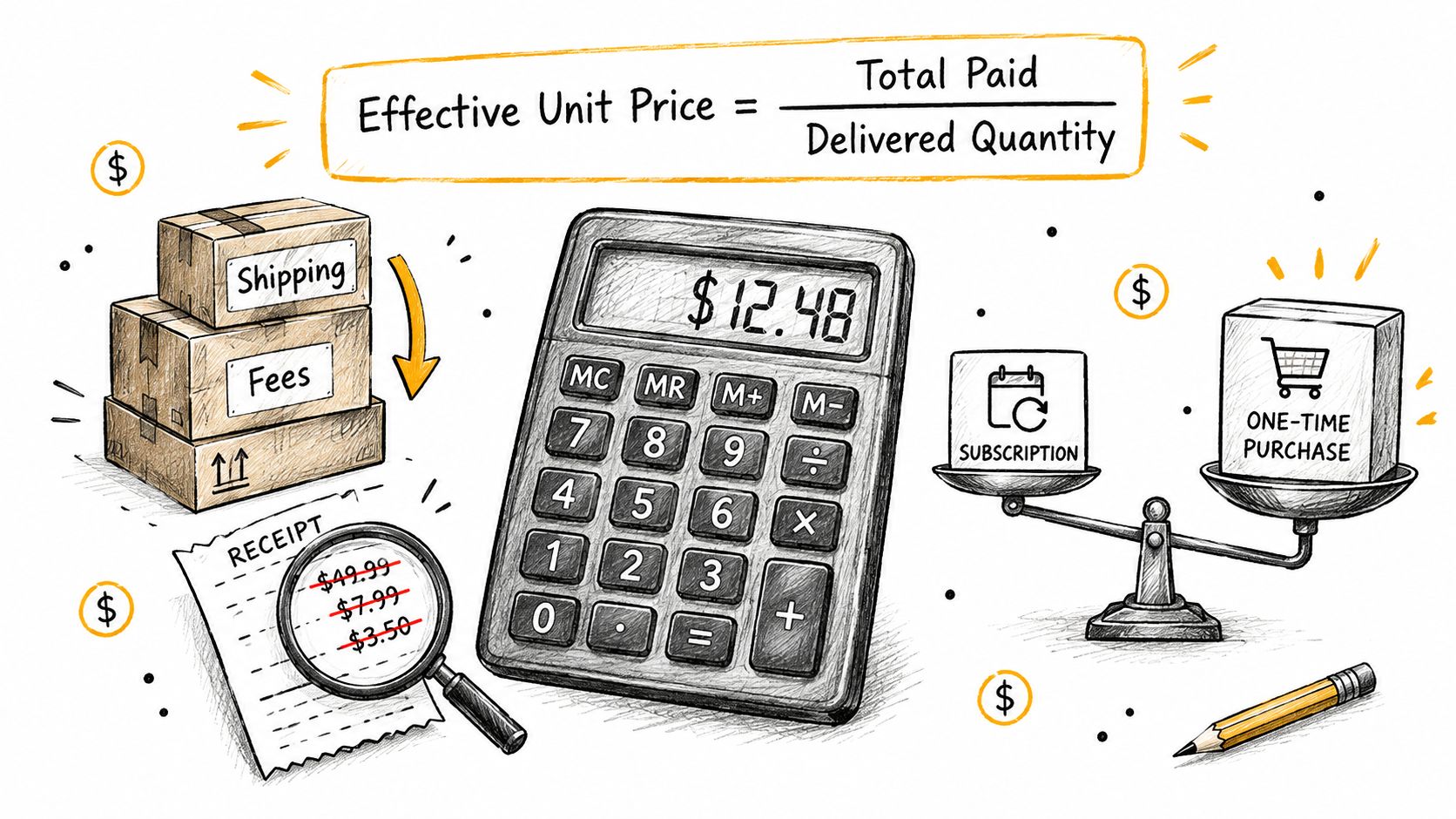
Where the Supposed Saving Disappears
Coffee arrives faster than you drink it, so freshness declines while bags accumulate. Supplements pile up because you miss days. Skincare renews before the current bottle is empty. Pet food keeps coming after your pet's diet changes. In each case, the merchant delivered on schedule. You still overpaid for useful consumption.
Price sensitivity isn't theoretical. In a 2025 Deloitte survey, the average ad-free streaming subscription cost about US$16 monthly, consumers considered US$14 the right price, and a US$5 increase would make 60% likely to cancel their favorite service, while EY reported 59% of households worried about annual streaming price increases, 58% viewed hikes as unfair or unreasonable, and 38% had canceled or planned to cancel, according to Deloitte's 2025 digital media trends survey. Physical subscriptions trigger the same reaction when renewal prices drift away from perceived value.
Buyer's frame: Cost per delivered unit flatters the merchant. Cost per consumed unit tells you the truth.
Before committing, run a direct subscription versus one-time purchase comparison. Subscribe only when your usage is steady, the cadence can change easily, and the discounted price still wins after waste and likely price movement. If you're still testing taste, tolerance, fit, or effectiveness, the one-time purchase is cheaper insurance.
How to Complete a Subscription Purchase Securely
Slow down at payment. Checkout is where a vague promise becomes an authorization, so verify the page before you submit your card.
Five Signals to Verify
- Correct merchant and secure connection: Check that the domain matches the store you intended to buy from and that the browser shows a secure HTTPS connection.
- Renewal terms in the summary: Confirm the product, quantity, frequency, next renewal date, and amount for the upcoming charge.
- Full cost broken down: Look for shipping, taxes, and fees separately, rather than accepting a single unexplained total.
- Working terms links: Open the cancellation, refund, pause, and price-change policies. Dead links or vague summaries are a stop sign.
- Account access after checkout: Make sure you'll receive login access to a portal where you can manage the plan yourself.
The stored payment token lets the merchant charge future renewals without asking for your card each time. That's normal, but you should still know how to replace or remove the payment method. Look for straightforward card-update tools and clear failed-payment notices. A good system tells you a charge didn't go through and gives you a secure way to fix it. It doesn't leave you guessing whether the subscription is active.
Cross-border buyers should also check language, currency, tax treatment, delivery territory, and whether reminders will make sense in their market. A translated product page means little if billing emails and cancellation screens switch to another language.
After ordering, save the confirmation email and note the merchant name that will appear on your statement. Turn on transaction alerts for the card you used. Then log in immediately and test the portal while the purchase is fresh. Find pause, skip, swap, card update, and cancel before you need any of them.
If you can't find the controls on day one, contact support and ask for direct instructions. If the answer is evasive, cancel while the first order is still easy to address.
Questions to Ask Before You Click Subscribe
Don't accept cheerful marketing answers. Ask operational questions and judge the subscription by the precision of the replies.
- Can I cancel inside my account: If cancellation requires email, chat, or a phone call, why?
- Can I skip without canceling: Does skipping move the billing date, and is there a deadline before renewal?
- Are pauses limited: How long can I pause, how often, and will the plan restart automatically?
- What happens to prepaid value: If I cancel early, do I lose undelivered orders, credits, points, or member pricing?
- Will you warn me first: Do you send a renewal reminder before every charge, and how much notice do I get?
- Can the price change: What happens after introductory pricing, and will you notify me before any increase?
- Can I move or change cards easily: Can I update my address and payment method without canceling and starting over?
Treat unanswered questions as answers. A merchant that can't explain its skip deadline probably hasn't built a forgiving system. A merchant that won't state its refund approach expects you to absorb its mistakes.
If the exit depends on reaching support during business hours, you don't have flexible control. You have permission-based cancellation.
You don't need perfect terms. You need terms that fit the product. Perishable and consumable goods need easy skipping. Prepaid plans need clear unused-value rules. Memberships need obvious access consequences. Match the controls to the risk, then decide.
Your Subscription Decision Framework
Use this framework every time you buy a subscription. Confirm the billing schedule, prove the cost per consumed unit, test the controls, and reject any checkout that hides the exit.
| Check | What to Confirm | Red Flag |
|---|---|---|
| Billing | Interval, next charge date, total cost | Only delivery frequency is shown |
| Price | Post-intro amount and increase notices | Future price is vague |
| Control | Pause, skip, swap, and cancel in your account | Support must approve changes |
| Usage | Quantity matches real consumption | Deliveries arrive before you finish |
| Recovery | Refund, damaged-order, and failed-payment rules | Store credit is forced without explanation |
Frequency deserves one final check. If you're unsure how often replenishment should arrive, this explanation of how to choose refill frequency from Fillaree gives useful context for matching refill timing to actual use.
The direction is clear. Buyers increasingly expect transparent renewals, reminders they can act on, and self-serve controls as standard. Subscribe when those conditions exist and your consumption is predictable. Buy once when they don't. A reversible decision is a safer decision.
If you sell subscriptions on Shopify, RecurX gives your customers the controls this guide tells them to demand, including pause, skip, swap, frequency changes, and payment updates through a self-serve portal. Visit RecurX to build recurring offers with clearer billing, integrated payment recovery, and account management that earns trust before the first renewal.
buy a subscription · subscription billing · recurring payments · subscription cancellation · subscription guide
Keep reading
- How to Curate Subscription Boxes That Actually ConvertLearn how to curate subscription boxes that retain customers, with practical steps on product selection, bundling, pricing, and fulfillment for Shopify stores.
- Shopify Customer Retention: A Practical Playbook for 2026Boost Shopify customer retention in 2026 with this practical playbook. Learn loyalty, dunning, cohorts, and lifecycle tactics that grow LTV.
- Shopify Subscription Sales: A Practical 2026 PlaybookGrow Shopify subscription sales with a 2026 playbook on plan design, storefront widgets, checkout links, Build-a-Box, dunning, migrations, and retention
Start growing recurring revenue on Shopify
RecurX has a 14-day free trial and zero transaction fees on every plan. Install in minutes.
Start your free trial →