7 Customer Portals Examples for Subscription Brands
Explore 7 customer portals examples from subscription brands, covering skips, pauses, swaps, and payment updates that support retention.
Explore 7 customer portals examples from subscription brands, covering skips, pauses, swaps, and payment updates that support retention.
A subscriber opens the pantry, sees two unopened boxes, and heads straight for the account page. She doesn't want to quit your brand. She wants the next delivery to wait, a different flavor to arrive, or a new card to replace the expired one before the next charge fails.
That moment decides whether you keep her. If the portal buries those fixes or forces her to email support, cancelling becomes the fastest way to solve a temporary problem. That's why these customer portals examples aren't judged by how polished they look in a screenshot.
Each one below is judged by what happens at the point of leaving. Does it offer a skip, pause, or swap before cancellation? Can the customer update payment details alone? Does the exit stay visible, or does the design trap her?
Those three tests matter because self-service is now the default expectation, not a perk. Research summarized by GetVoIP, citing Statista, found that 89% of U.S. consumers expect companies to provide an online self-service support portal, as detailed in GetVoIP's roundup of customer service statistics. Build for that expectation, and the portal stops being a help page. It becomes your retention channel.
Table of Contents
- 1. RecurX
- 2. Oats Overnight
- 3. Native
- 4. Better & Better
- 5. Bumpin Blends
- 6. Keap
- 7. Taste Salud
- How the seven customer portal examples compare on self-service actions, best-fit brands, and pricing transparency
- Turning Portal Examples Into a Retention Playbook
1. RecurX
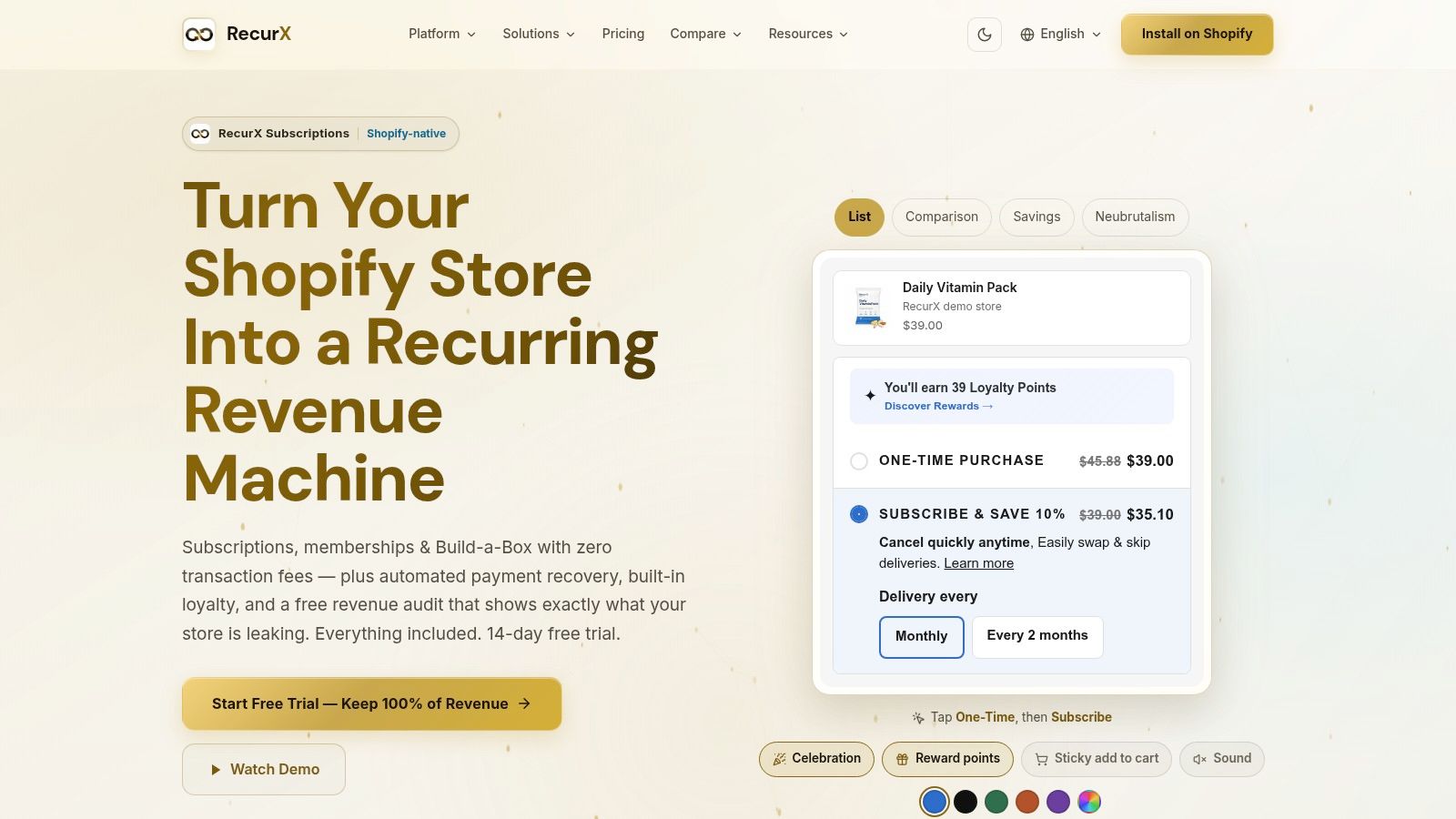
A subscriber who wants to leave may only need to delay the next order or change what arrives. RecurX is the platform example here: rather than a finished brand portal, it is a Shopify app merchants use to build one within Shopify customer accounts, on their own domain. The vendor describes this setup as an alternative to sending subscribers to a third-party page.
What the subscriber can actually do
According to RecurX, subscribers can pause, skip, swap products, change delivery frequency, update payment details, and cancel. That gives a customer options to resolve common reasons for leaving while keeping cancellation available. Merchants can choose which actions to enable, translate portal labels, and match the design to their storefront theme.
The vendor also lists pay-as-you-go and prepaid plans, memberships, and Build-a-Box subscriptions, with flexible billing schedules, free trials, and tiered discounts. Other listed tools include loyalty rewards and automated payment recovery, which can help with retention beyond the portal through declined-payment retries and card update prompts. Subscription analytics, bundles, checkout links with QR codes, and multilingual tools are also included.
Practical rule: Test the full customer journey. In one login, a subscriber should be able to find the active plan, skip an order, update a card, and check the next charge date without starting over.
A general customer-service finding does not show whether a subscription portal completes those tasks. Test the flow yourself: make sure a customer can act on a delivery or payment problem, and still see a clear route to cancel. The replicable tactic is to put save options and exit controls in the same account experience, rather than hiding cancellation behind support.
Pricing and the honest trade-offs
RecurX's own listing says plans start at $29/month for up to 1,000 active subscribers, while Pro costs $49/month with unlimited subscribers and additional integrations. The vendor lists a 14-day free trial and zero transaction fees for both plans. It also describes storefront widgets with 16 templates that adapt to your theme and check color contrast for accessibility, plus A/B testing for subscribe-and-save presentations.
- Zero transaction fees: The vendor says this applies across plans, which may matter to merchants comparing recurring-order costs.
- Native Shopify fit: Shopify checkout, admin, and customer accounts remain part of the merchant's existing workflow.
- Migration support: RecurX lists connectors and CSV imports for moving from other subscription platforms.
The trade-offs deserve attention. The vendor's listing reports a 5.0 rating from 6 reviews, a small public review base despite the high score. Saved payment cards do not automatically transfer during migration, and some integrations require Pro. Merchants who need a longer public track record may prefer to wait. Those weighing transaction fees more heavily can use the trial to test the portal, including how visible cancellation remains alongside skip, swap, and pause options.
2. Oats Overnight
A subscriber checking the next shipment may want a different flavor, a pause, or a way out. Oats Overnight puts shipment controls alongside product content, giving customers reasons to explore their options before canceling.
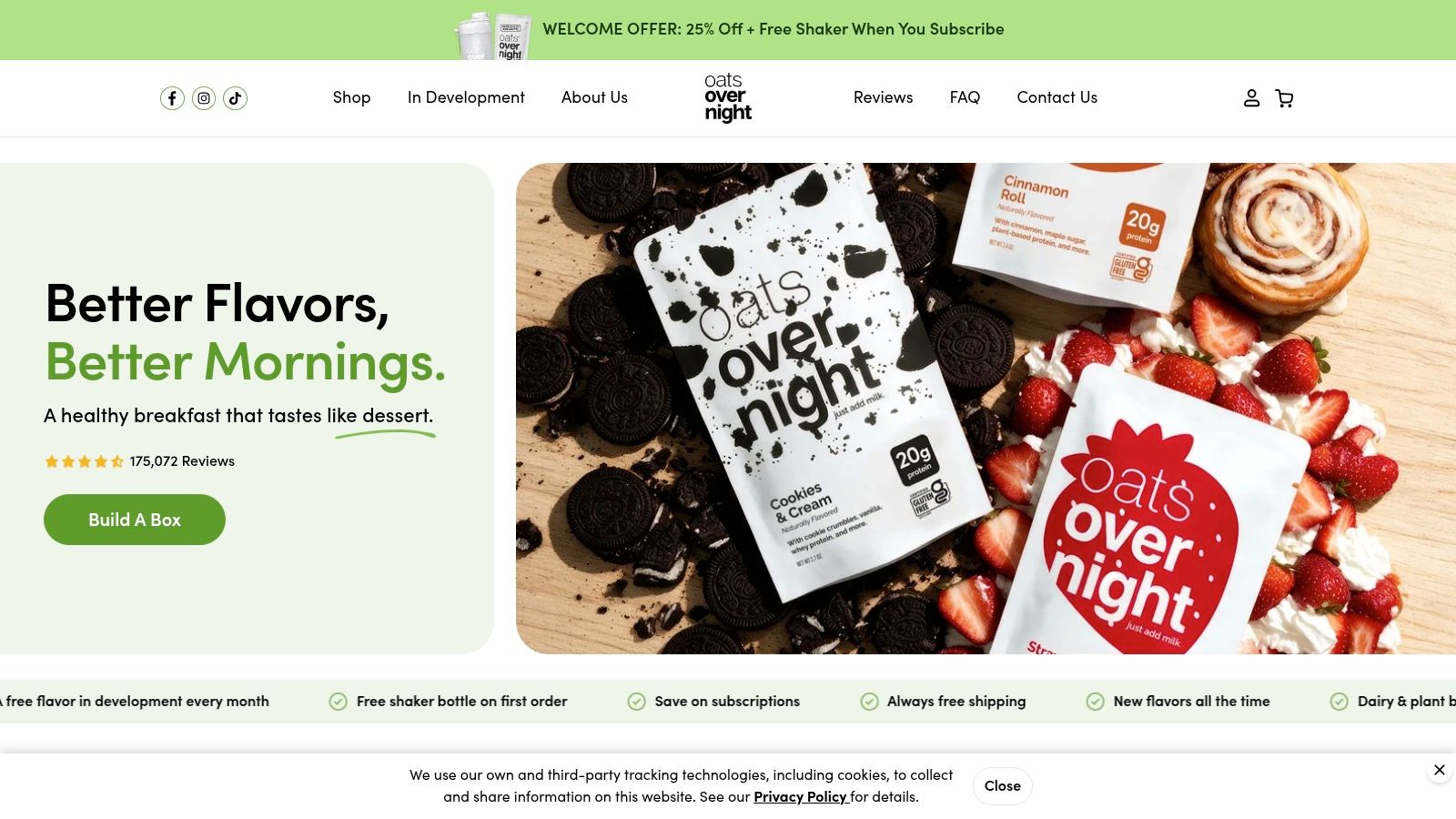
Customers can skip, swap, cancel, or adjust upcoming shipments. The portal also features flavor notes, ratings, perks, and seasonal flavors. For a brand with a changing range, this gives subscribers something useful to browse while managing an order. The exit remains visible among the controls, rather than being replaced by discovery content.
The tactic worth copying
Place relevant product discovery beside the controls customers came to use. A seasonal flavor could give someone considering a pause another option to explore, but it should not obscure the cancellation path. On a Shopify store, organize the portal so customers can compare the skip, swap, and cancel choices in the same account experience. Review your customer portal login as part of that experience, since customers need a clear route back to their account.
- Content alongside controls: Flavor information and perks accompany shipment management.
- Seasonal swaps: Show changing products as an alternative to skipping, without making cancellation harder to find.
This approach suits brands with enough product variety to keep discovery relevant. A single-SKU replenishment business has less to feature, so the seasonal hook may not translate. The full account experience also requires subscriber access, which limits what someone outside the program can inspect. Treat the portal's described controls and content as the basis for comparison, and test the actual customer flow on your own store before adopting the pattern.
3. Native
A deodorant delivery that arrives too soon can leave a subscriber with surplus product; one that arrives too late may send them to a store and another brand. Native sells deodorant and personal care staples, so its portal addresses a practical retention problem: matching deliveries to how quickly customers use them.
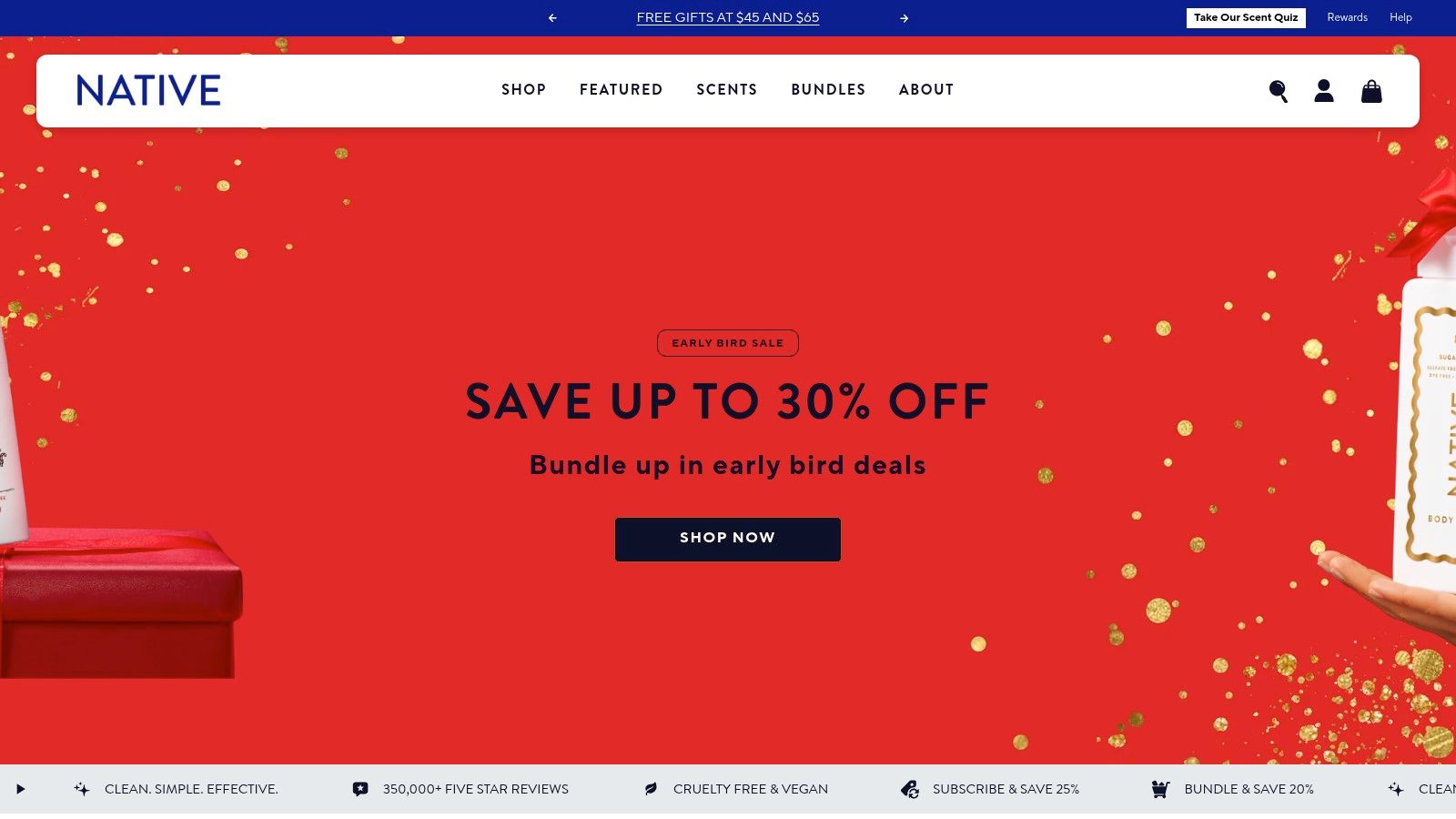
Subscribers can delay an upcoming delivery, swap products, and add one-time items to a recurring shipment from a branded, responsive dashboard. Delay gives customers an alternative to cancellation when they have too much on hand. Swapping lets them change what arrives, while an add-on can make the next shipment more useful. The tactic to copy is to put a relevant change option in reach before a customer commits to leaving.
Where the revenue angle appears
One-time add-ons give subscribers a way to add a product to an existing shipment. Someone who opens the portal to push a delivery back may also choose another scent, keeping the order active and adding an item in the same session. For a Shopify store, the transferable design principle is to place the fix for the immediate problem before an upsell. This customer portal design approach makes the options clear without requiring a merchant to copy Native's platform.
The trade-off is trust. Cancellation alternatives should help customers adjust their subscription, not obscure the exit. Keep cancellation visible and make delay or swap an easy choice, not a hurdle.
The implementation details are described in a published agency or platform case study, and the full portal requires customer access. That limits what a visitor can independently test. Still, the delay-first approach is practical for replenishment brands: offer a change that matches the customer's reason for leaving, while leaving cancellation within reach.
4. Better & Better
Toothpaste doesn't inspire browsing. Better & Better accepts that and builds its portal around pure control, which is the right call for a utilitarian consumable.

Customers can change product type, quantity, and delivery frequency, swap products, skip shipments, and choose upcoming order dates. They can also view prior purchases in the same account. Nothing on that list is glamorous, and that's the point. For oral care, skincare, or supplements, the portal's job is matching supply to actual household usage.
The detail most brands miss
The account experience also supports one-time purchasers, not just subscribers. That turns the portal into an acquisition path. A customer who bought once, logs in to reorder, and sees her purchase history is already inside the environment where converting to a subscription takes one decision. Most brands treat the portal as a subscriber-only room and lose that on-ramp.
- Cadence control: Quantity and frequency changes fix the too-much-product problem at its root.
- Shared account access: Subscribers and one-time buyers use the same space, so upgrading feels continuous.
- Broad category fit: The model transfers cleanly to any consumable with predictable usage.
The weaknesses are about evidence, not design. The published case study doesn't specify portal pricing, and reported business outcomes come from that case study rather than independent research. There's also a usability burden hiding in the control itself. Six adjustable settings only help if customers can find and understand them on a phone in under a minute. Audit your labels before you copy the depth.
5. Bumpin Blends
Bumpin Blends sells smoothie blends, where variety can decide whether a subscriber keeps an order. Its portal lets customers curate a different box each month, try new blends, and change delivery dates or frequency without contacting support. The cancellation alternative is concrete: change the next box before ending the subscription.
Keep the exit visible, make the next box adjustable
When a customer tires of a flavor, offering a skip or pause may only delay the decision to leave. Bumpin Blends gives subscribers another option: rebuild the upcoming box while keeping the recurring order active. Merchants can copy that tactic by putting product swaps within the subscription management flow, rather than making customers ask support to change an order.
The company describes its portal as connected to a personalization quiz and marketing workflows. That setup can carry customer preferences into later interactions, though the section does not establish exactly how those preferences affect portal recommendations. For a Shopify store, the practical lesson is to make assortment changes self-service and keep cancellation accessible alongside them, not to assume quiz data automatically improves retention.
Pylon's summary of customer support statistics reports that 61% of customers say they'd rather use self-service resources for simple issues than contact a live agent. A blend swap is a clear example of a task customers can complete themselves.
- Monthly curation: Subscribers change the box contents without giving up recurring-order convenience.
- Preference capture: A quiz can collect useful choices, provided the store explains how that information will be used.
- Customer feedback: The published case study includes feedback that the portal made subscription management easier.
Flexible boxes have an operational cost. More combinations increase assortment and fulfillment work, and make inventory errors more likely. The published case study also includes no customer-facing portal price, so merchants should weigh warehouse complexity alongside software costs before copying the model. Pylon's summary of customer support statistics
6. Keap
A subscriber who dislikes the season's candle scent needs a simple alternative to cancelling. Keap offers three relevant self-service actions: subscribers can swap scents, change order dates, or skip a month. These controls suit a subscription built around seasonal rotation, where scent preferences can change from one delivery to the next.

Each action addresses a different reason a subscriber might reconsider an order. A scent swap keeps the subscription active when the current selection is wrong; changing the date or skipping a month helps when the timing does not work. Merchants can copy the tactic by placing the most common alternatives to cancellation where subscribers can find them, while keeping the exit clear.
Matching portal scope to product rhythm
When comparing customer portal software, feature counts alone do not show whether a portal fits a product's buying cycle. For rotating products, swap and skip options may be more relevant than controls designed for fixed replenishment. That is a practical way to judge scope, not proof that a narrower portal will work better for every brand. Extra features can also mean more setup, so choose based on the changes subscribers actually need to make.
Copy this: Ask which subscription changes generate the most support requests, then make those actions easy to complete on mobile.
Keap's example offers a focused set of controls for a rotating candle subscription, but other product models may need different options. No standalone portal price or detailed user experience evaluation is published. If scent availability or subscription rules limit a swap, explain those terms in the portal before checkout, so subscribers know what to expect.
7. Taste Salud
A subscriber considering cancellation needs to know what changes are available before leaving. Taste Salud's portal is listed as supporting pausing, swapping, and cancelling. Those actions make it relevant to the article's three tests: whether a subscriber can pause or swap before cancelling, whether the exit remains visible, and which choices another merchant can copy.
The available description confirms all three actions, but does not show their order or whether pause and swap appear on the cancellation path. It also does not establish whether the cancel control stays visible throughout the process. Treat that as an evidence limit: the listed actions alone do not prove that subscribers see alternatives before cancellation or can find the exit easily.
Assessing the cancellation path
For a supplement, beverage, or wellness subscription, the practical tactic is to put a relevant alternative near the exit. A pause can suit someone who has too much product; a swap can help when a product no longer fits. Keep cancellation available as a separate action, and check the customer-facing flow on mobile to confirm the alternatives do not obstruct it.
- Actions listed: Subscribers can pause, swap, or cancel.
- Order not established: The available description does not verify whether pause and swap are offered before cancellation.
- Exit visibility not established: It does not show where the cancel option appears in the flow.
Merchants can copy the action set without assuming Taste Salud's portal presents those choices in a particular sequence. Test the cancellation path with a subscriber account, note whether the alternatives are clear and optional, and make sure the exit is easy to locate. No customer-facing portal price is listed, and the reported description does not provide enough evidence to assess retention outcomes.
How the seven customer portal examples compare on self-service actions, best-fit brands, and pricing transparency
| Item | Core Self-Service Actions | Best For | Portal Pricing Disclosed |
|---|---|---|---|
| RecurX | Manage subscriptions, billing, plans, and payment recovery | Shopify merchants seeking subscription tools with no transaction fees | $29/month for up to 1,000 active subscribers; Pro $49/month for unlimited subscribers |
| Oats Overnight | Skip, swap, cancel, or adjust shipments; explore flavors and perks | Food, beverage, and replenishment brands | Not disclosed |
| Native | Delay deliveries, swap products, add one-time items, and view cancellation alternatives | Personal-care and replenishment brands | Not disclosed |
| Better & Better | Change products, quantity, and delivery frequency; skip shipments and view past purchases | Consumable brands serving subscribers and one-time buyers | Not disclosed |
| Bumpin Blends | Curate monthly boxes, try flavors, and change delivery dates or frequency | Brands offering customizable boxes and product assortments | Not disclosed |
| Keap | Swap scents, change order dates, or skip a month | Curated subscriptions with rotating or seasonal products | Not disclosed |
| Taste Salud | Pause, swap, or cancel subscriptions | Supplement, beverage, and wellness brands | Not disclosed |
Turning Portal Examples Into a Retention Playbook
A subscriber opens the account page to cancel before the next shipment. A clear skip, swap, or pause option can offer a better fit, while a visible cancellation path preserves trust. Strong portals also let customers update payment details themselves, turning an expired card into a fix rather than a failed charge.
Test your portal as a subscriber on a phone. Find the active plan, skip the next order, change its date, update the payment method, and confirm the next charge. Record every step that sends customers to support or asks them to enter information again. Copy the tactic that fits your store: put a skip or swap beside the cancellation choice, and keep the exit easy to find.
Portals now handle operational tasks, not just FAQs. Salesforce estimates that self-service resolves 54% of customer issues at organizations using it, according to Salesforce's overview of customer self-service. Treat this as an organizational average, not a promise for your store. Results depend on whether subscribers can finish tasks in the portal or hit a dead end.
Heretto's research found that 58% of organizations had implemented self-service solutions, a cross-industry benchmark reported in Heretto's 2025 self-service report. Ecommerce adoption may differ. Regardless of adoption rates, subscribers compare your account page with the portals they already use.
The checks most portal reviews skip
Two checks help reveal whether a portal works for actual subscribers: accessibility and support handoff. A 2025 ecommerce accessibility snapshot evaluated major sites against 15 critical WCAG 2.2 criteria, documented in ContentSquare Foundation's ecommerce accessibility snapshot. Test keyboard focus, target sizes, error messages, and focus order in portal dialogs, including third-party payment components. A portal that matches your theme may still be difficult to use.
Check what happens when self-service fails. Does the support agent receive the subscriber's account context, or must the customer start again in chat? Preserve that context in the handoff so a failed portal task does not become a second support task.
Start with one change that addresses a common support request or cancellation risk: a visible skip button, a self-service card update, or a swap option beside the cancel link. Measure completed customer journeys, not portal visits, then choose the next improvement based on where subscribers still get stuck.
If your Shopify audit uncovers dead ends, RecurX offers a portal for pausing, skipping, swapping, updating payment details, and changing delivery frequency on your own domain. Run the journey test as a subscriber and see whether those tasks can be completed without contacting support.
customer portals examples · subscription portal · Shopify subscriptions · subscription self-service · subscription management
Keep reading
- Best Upsell App for Shopify: Top 10 Picks 2026Compare the 10 best upsell app for Shopify options by pricing, placements, subscriptions and loyalty support to find the right fit for your store.
- Quantity Price Breaks for Shopify SubscriptionsSet quantity price breaks on Shopify subscriptions without giving away margin. Compare tiers, Build-a-Box, cart rules, and AOV versus profit.
- Reduce Involuntary Churn on Shopify: 5 Recovery StepsReduce involuntary churn on Shopify with decline routing, card-update flows, retry timing, and measurement that avoids inflated recovery numbers.
Start growing recurring revenue on Shopify
RecurX has a 14-day free trial and zero transaction fees on every plan. Install in minutes.
Start your free trial →