Subscription Pay as You Go: A Shopify Guide
Learn how subscription pay as you go works for Shopify stores. This guide covers pricing, benefits, and tips to boost your revenue.
Learn how subscription pay as you go works for Shopify stores. This guide covers pricing, benefits, and tips to boost your revenue.
More than half of U.S. online adults are interested in subscription pay-as-you-go options, and more than two-thirds want to pause a subscription instead of canceling it. For physical-goods merchants, that means flexibility can matter more than forcing every customer into the same recurring delivery schedule.
The shift is especially important on Shopify, where subscription brands sell products with uneven consumption patterns. A household may use supplements faster during one month, postpone skincare while traveling, or need pet supplies sooner than expected. A rigid monthly plan turns those normal variations into customer-service requests, skipped payments, or cancellations.
Pay-as-you-go can reduce that friction, but it isn't automatically the right answer. Prepaid plans can still outperform it when demand is predictable and fulfillment depends on reliable reorder timing. Memberships can make more sense when the customer is paying for access, rewards, or community rather than a predictable shipment.
Table of Contents
- Why Shopify Merchants Need Flexible Subscriptions
- How Pay-As-You-Go Subscription Billing Works
- Pay-As-You-Go vs Prepaid vs Membership Models
- Customer Experience in Flexible Subscriptions
- Implementing Pay-As-You-Go on Shopify
- When to Choose Pay-As-You-Go for Your Products
- Real Examples of Successful Shopify Pay-As-You-Go Brands
- Next Steps for Implementing Flexible Subscriptions
Why Shopify Merchants Need Flexible Subscriptions
Over half of U.S. online adults are interested in paying for subscriptions through pay-as-you-go models, and more than two-thirds want the ability to pause rather than cancel, according to Forrester reporting cited by the Mobile Ecosystem Forum. For Shopify merchants, the message is practical. Customers may want recurring convenience while resisting a commitment that ignores how quickly they use a product.
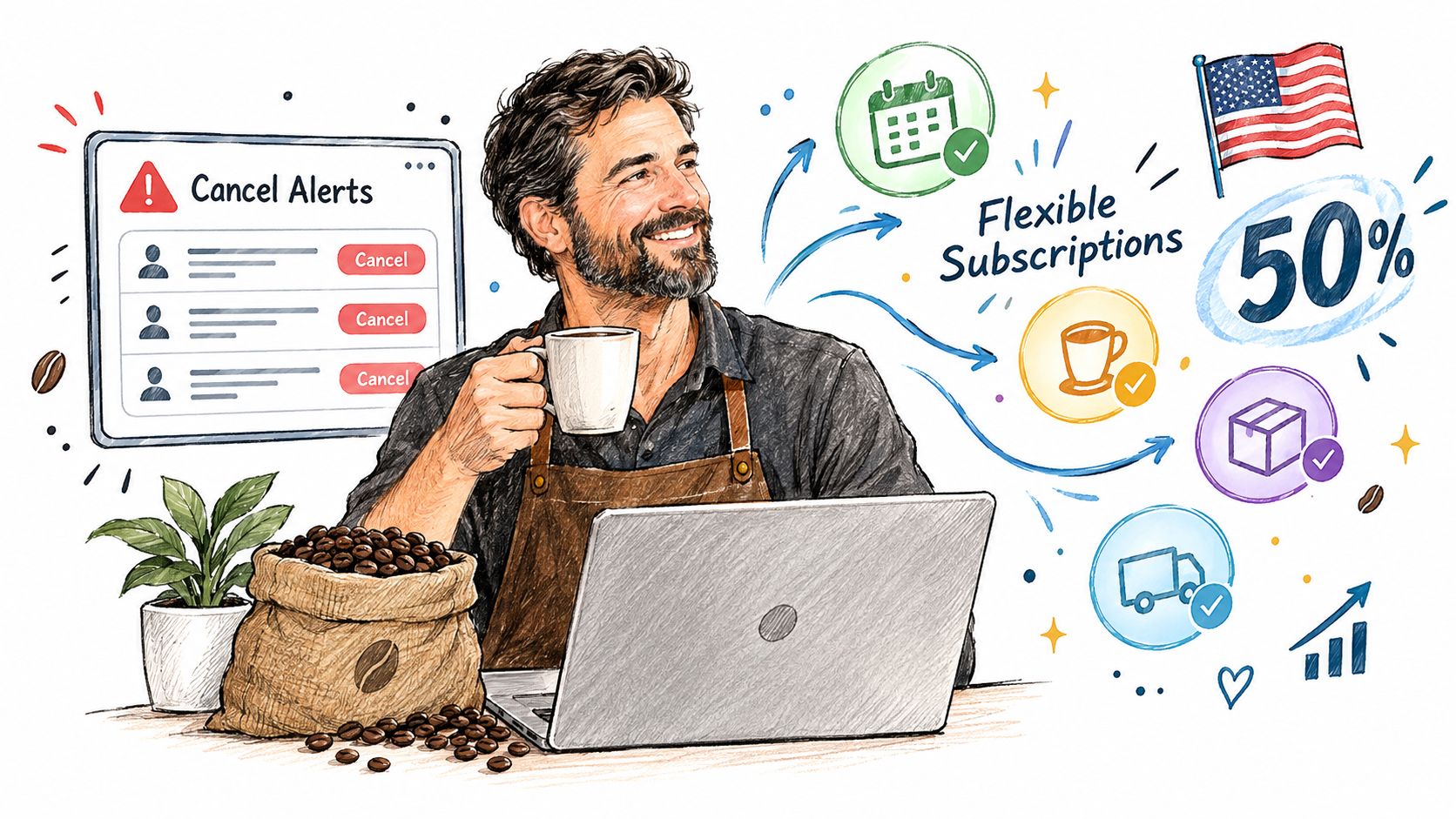
Consider a coffee customer who receives a shipment or two, then cancels because the delivery schedule is faster than their drinking habit. The coffee may satisfy them. The fixed commitment creates the problem.
Flexibility changes the cancellation decision
A fixed subscription combines a recurring charge with a predetermined interval. A pay-as-you-go plan can connect payment to a shipment, selected box, order quantity, or usage tier. The merchant retains an ongoing customer relationship, while the customer pays according to a choice that better reflects actual needs.
That structure suits products with uneven consumption, including coffee, supplements, skincare, and pet supplies. A customer might need more during one period and less during another. Options to pause, skip, swap products, or change frequency give them a way to adjust without ending the relationship.
Practical rule: Treat flexibility as a retention feature, not merely a billing setting.
The right model still depends on the product and operation. Pay-as-you-go reduces friction when customers value control and consumption varies. Prepaid plans can perform better when demand is predictable, the merchant needs dependable reorder timing, or fulfillment costs reward a larger commitment. A hybrid approach can combine a flexible recurring plan with prepaid savings, giving customers choice while protecting unit economics.
For Shopify merchants, the decision should begin with consumption behavior, not billing technology. Review how often customers skip, pause, change quantities, or cancel before the next shipment. Those patterns show whether a flexible plan addresses a real barrier, or whether a prepaid or hybrid offer would create stronger value.
How Pay-As-You-Go Subscription Billing Works
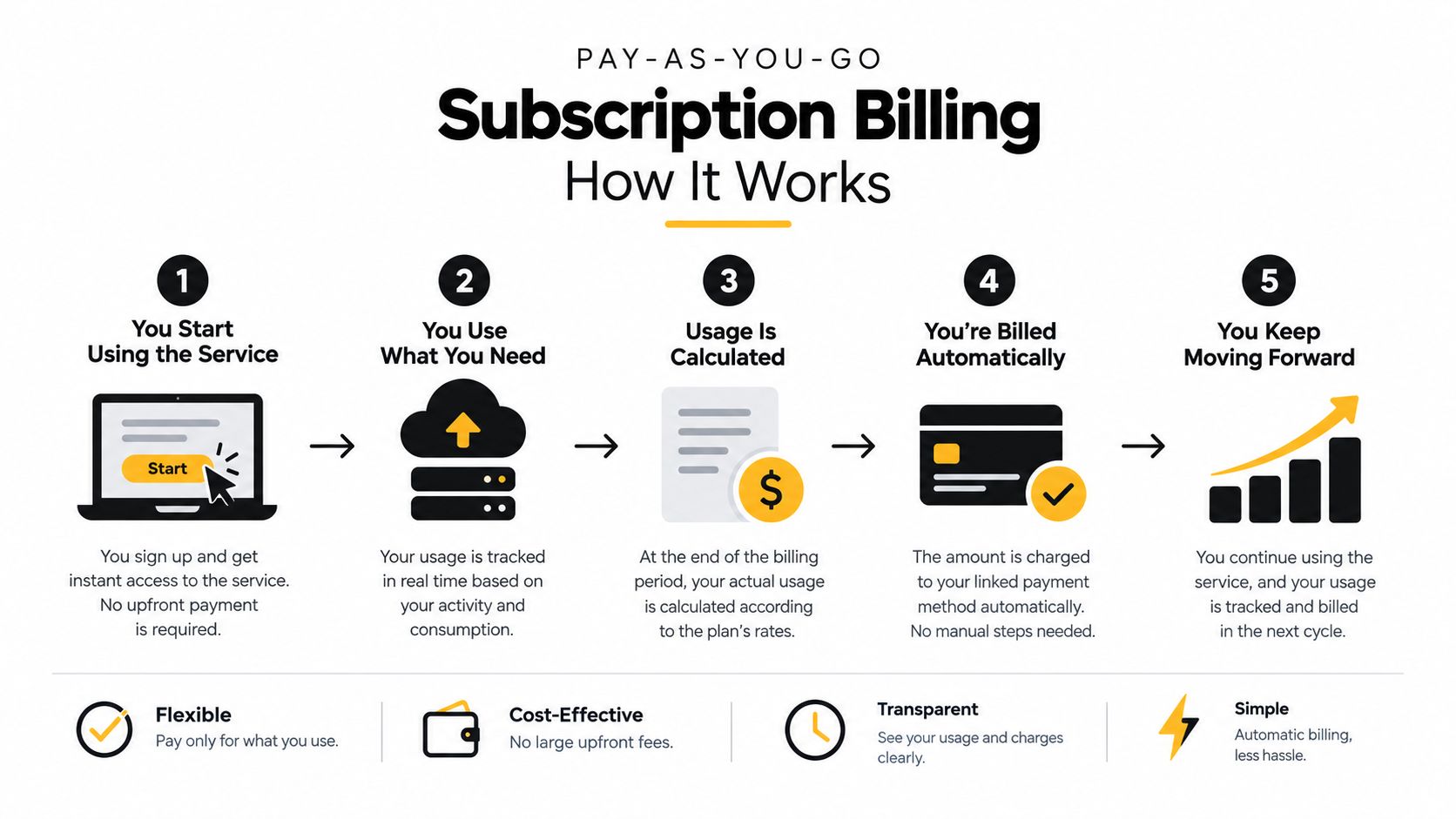
Pay-as-you-go billing starts with a measurable event. In physical-goods ecommerce, that event is often a shipment, box, item quantity, or selected delivery cycle rather than a software metric.
A merchant first defines what the customer is paying for. The store might charge for each shipment, price a box according to its contents, or apply a rate to a chosen consumption tier. The customer then selects a cadence, such as weekly, monthly, or yearly, while the system records the order or usage event connected to that cadence.
The billing flow in practice
Think of the model like a utility bill. A customer doesn't pay the same amount regardless of consumption. The bill reflects the measured activity during the relevant period. For a Shopify store, the equivalent might be a charge when a selected box ships, with the amount determined by its contents or quantity.
A practical flow looks like this:
- Define the event. Choose shipment, box, item count, or another unit the customer can understand.
- Set the cadence. Offer weekly, monthly, or yearly intervals where they fit the product and fulfillment operation.
- Record consumption. Capture the order, shipment, quantity, or tier associated with the subscription.
- Apply the contracted rate. Use the selected price, discount, or overage rule.
- Reconcile the period. Make sure the billing record, fulfillment event, and revenue record refer to the same consumption window.
The last step is easy to overlook. Revenue recognition guidance from Tabs distinguishes usage-based revenue, recognized as consumption occurs, from fixed subscription revenue, recognized ratably over the service term under ASC 606 and IFRS 15. The operational implication is that your billing system, order records, and finance process need a shared event stream.
How it differs from other plans
A fixed subscription charges a recurring amount whether the customer consumes more or less during the period. A prepaid subscription collects payment upfront for a defined bundle or number of deliveries. Pay-as-you-go lowers the commitment by charging around the actual order or usage event.
Hybrid plans combine both approaches. Shopify's subscription billing automation guidance describes hybrid billing as a fixed recurring fee combined with usage-based charges, which can suit stores that want a predictable base amount plus flexible add-ons, overages, or premium bundles.
Pay-As-You-Go vs Prepaid vs Membership Models
The right subscription model depends on what customers value and what your operations can reliably deliver. A product with variable consumption needs a different commercial structure from a product customers reorder on a dependable schedule.
| Model | Best For | Customer Control | Revenue Predictability |
|---|---|---|---|
| Pay-as-you-go | Variable consumption, changing household needs, flexible delivery | High, especially when customers can pause, skip, swap, or change frequency | Lower than prepaid, because order timing and quantity can vary |
| Prepaid | Predictable replenishment, bundles, and loyalty incentives | Moderate, depending on pause and skip rules | Higher during the prepaid term |
| Membership | Community, exclusive benefits, rewards, and access | High for benefits, but less tied to product consumption | Predictable recurring fee when members remain active |
Pay-as-you-go fits variable demand
Supplements are a useful example. One customer may take a product consistently, while another may adjust usage, share it with a household member, or pause during travel. Charging per shipment or selected quantity can feel more reasonable than locking both customers into an identical schedule.
Coffee can move in either direction. A customer who reliably drinks the same amount may appreciate a prepaid discount for planned deliveries. Someone whose household size or consumption changes may prefer pay-as-you-go. The product category alone doesn't decide the model, the consumption pattern does.
Prepaid rewards commitment
Prepaid plans work well when the merchant gains operational value from predictable demand and the customer receives a meaningful reason to commit. A coffee brand might offer a bundle of planned deliveries with a loyalty benefit, while a replenishment brand might use a prepaid pack to simplify inventory planning.
That structure should remain transparent. Customers need to understand the number of shipments, the renewal point, the cancellation terms, and what happens if they need to pause. A clear prepaid subscription structure can protect both the merchant's planning needs and the customer's expectations.
Memberships sell the relationship
Skincare brands may use membership tiers when the value comes from early access, consultations, rewards, or exclusive products. In that case, the recurring fee isn't primarily paying for a fixed shipment. It's paying for an ongoing benefits package.
Decision test: If customers ask, “Can I change what arrives and when it arrives?”, start with consumption. If they ask, “What do I get for belonging?”, evaluate membership.
Customer Experience in Flexible Subscriptions
A flexible billing model still creates churn if customers can't control it easily. The storefront promise and the account experience need to match. A shopper shouldn't be told that a subscription is flexible, then forced to email support to skip one delivery.

Put the important actions in the portal
A useful customer portal should make common changes obvious:
- Pause: Stop upcoming charges without ending the relationship.
- Skip: Move one delivery when the customer has enough stock.
- Swap: Change a flavor, size, scent, or product within the plan.
- Change frequency: Move between supported intervals.
- Update payment: Replace an expired or declined card without contacting support.
- Cancel: Provide a clear cancellation path instead of hiding it.
Native Shopify account integration can help keep those actions on the merchant's domain and within a familiar account experience. That matters because customers are more likely to trust a subscription they can manage without being redirected through an unfamiliar interface.
A customer portal design guide is useful when mapping the account experience. Merchants should test the portal from the customer's perspective, including the first successful change, a skipped order, a failed payment, and a cancellation.
Communication prevents unpleasant surprises
Send a billing notification before a charge when the timing or amount could change. Explain what will ship, which products are included, and how the customer can modify the order. If a payment fails, use a clear message and a direct card-update path rather than letting the subscription lapse without warning.
Dunning should also reflect the subscription model. Automated retries can recover a temporary payment problem, while email, SMS, or WhatsApp reminders can guide the customer toward a correction. The tone should be helpful, not punitive.
The following video can help teams think about the relationship between subscription controls and customer confidence.
Implementing Pay-As-You-Go on Shopify
Implementation starts with product economics, not an app setting. Decide what the customer is buying, what event triggers a charge, and how fulfillment will identify that event. Then configure the storefront and account controls around that decision.
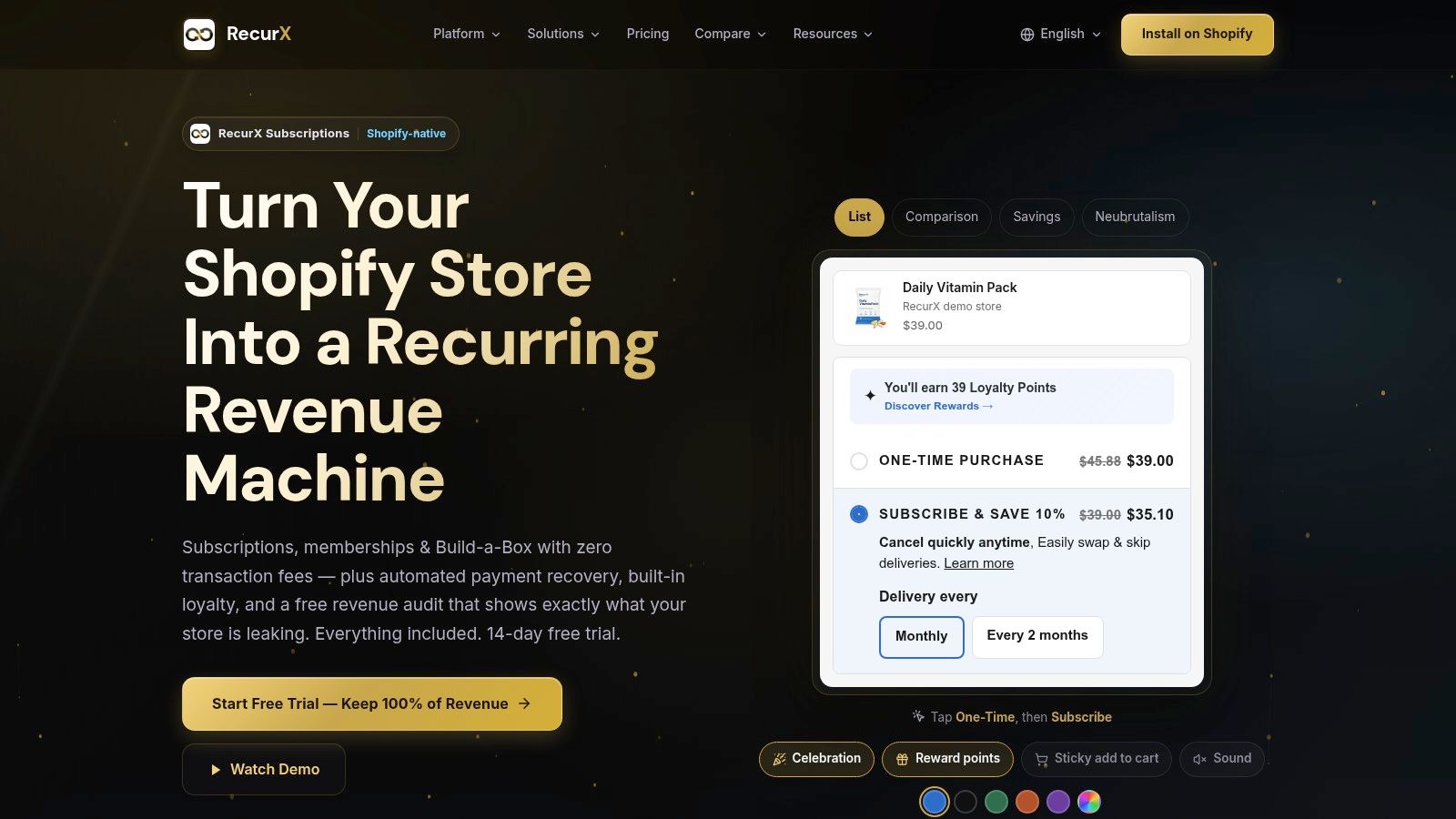
RecurX is one Shopify-native option for setting up subscription plans, prepaid offers, memberships, and bundled products. Its plan configuration supports weekly, monthly, and yearly intervals, tiered discounts that ramp after a defined number of orders, free trials, and anchor-date billing.
Build the plan around a clear event
A merchant selling a Build-a-Box offer might charge when each box ships. A supplement store might let customers choose a quantity and frequency, then charge for each scheduled shipment. A pet brand could set a recurring base order and allow pay-as-you-go add-ons when consumption increases.
Anchor-date billing helps align future charges with a preferred calendar date. That can make fulfillment and customer budgeting easier, but only if the store explains the date clearly during checkout and in account notifications.
Make the storefront feel native
Subscription widgets should look like part of the theme rather than an embedded foreign component. RecurX provides 20 widget templates that auto-match theme colors and fonts, with color detection designed for accessible contrast. Test the widget on product detail pages, mobile layouts, quick-buy flows, and bundle configurations.
Loyalty can sit on top of the billing model. Points per renewal, VIP tiers, milestone bonuses, and store-credit redemption give customers a reason to continue without hiding the underlying price. The reward rules should remain easy to understand, especially when plan discounts and loyalty benefits stack.
Protect revenue after the first charge
Payment recovery belongs in the initial setup. Configure decline-aware retry windows, dunning messages, and one-click card-update links before launch. Review the subscription records after test failures to confirm that the customer, order, payment status, and fulfillment state remain aligned.
For a deeper evaluation of the technical and operational requirements, compare subscription billing platform capabilities against your store's actual workflow. The right system should support plan changes without creating separate manual processes for finance, fulfillment, and support.
When to Choose Pay-As-You-Go for Your Products
Start with the product, then examine the customer. Pay-as-you-go works when consumption varies enough that a fixed shipment schedule creates friction, but the merchant can still define a simple, understandable charge event.
Use this four-part assessment
Consumption variability: Supplements can suit pay-as-you-go when customers take different quantities or change their routines. Pet products can also benefit when household size, pet age, or feeding patterns affect reorder timing.
Delivery preference: Coffee customers may want weekly deliveries, monthly deliveries, or occasional replenishment. If the store can support those choices without confusing fulfillment, flexible intervals can reduce the pressure to cancel.
Seasonality and need: Skincare demand often changes with weather, travel, or personal routines. A customer may want an ongoing relationship but not a shipment every cycle. Pause and skip controls become more important than a permanent discount.
Operational tolerance: Every extra option creates a fulfillment and support requirement. Confirm that inventory, warehouse pick lists, shipping rules, and customer notifications can handle varied dates and quantities before publishing the plan.
Watch for the wrong fit
A product with highly predictable consumption may perform better as prepaid. Customers who always need the same item at the same interval may prefer a clear bundle discount and a known delivery plan. Prepaid also gives the merchant stronger planning visibility.
Membership works better when the customer values access, education, exclusivity, or community. Forcing that relationship into a consumption-based plan can weaken the offer because the recurring value isn't the shipment itself.
Ask three questions before choosing:
- Can the store measure the charge event without ambiguity?
- Do customers want control more than they want the deepest commitment discount?
- Can operations fulfill variable schedules without creating avoidable errors?
If the answer to the first question is no, simplify the offer before launching. If the answer to the third is no, begin with a narrower interval range or a prepaid structure.
Real Examples of Successful Shopify Pay-As-You-Go Brands
The strongest examples are useful as patterns, not promises of identical results. A supplement merchant might learn that customers don't need a lower price as much as they need the ability to pause when they have unused stock. Pairing flexible billing with a visible pause control can preserve the relationship without pretending that every customer consumes at the same rate.
A coffee roaster can take a different approach. It might allow variable-frequency orders while using tiered pricing to encourage larger baskets or continued participation. The lesson isn't that every roaster should use the same discount. It's that the offer can reward commitment without removing the customer's ability to adjust delivery timing.
A pet-product company may use a hybrid structure. A recurring base subscription can cover a dependable core product, while pay-as-you-go add-ons handle changes in household demand, treats, accessories, or seasonal needs. This model gives the merchant a planning anchor while allowing customers to expand or reduce the order around real consumption.
What these examples have in common
Each brand matches the billing mechanism to a specific customer behavior:
- Variable usage: Let customers control timing or quantity.
- Predictable replenishment: Use prepaid value where commitment benefits both sides.
- Mixed demand: Combine a stable base with flexible additions.
- Retention risk: Make pausing easier than canceling.
Merchants evaluating acquisition should also connect subscription design with the post-click experience. Resources on proven mobile acquisition strategies can help teams consider how campaign traffic, mobile checkout, and the subscription offer need to work together. A flexible plan won't help if shoppers can't understand it on a small screen.
The practical takeaway is simple. Don't copy another brand's billing format because its product looks similar. Identify the behavior that causes cancellation, then give customers a control that addresses that behavior without undermining fulfillment economics.
Next Steps for Implementing Flexible Subscriptions
Before choosing subscription pay-as-you-go, assess product variability, customer preference, operational capacity, and revenue goals. The right model should reduce buying friction while keeping billing, fulfillment, and financial planning aligned.
Use this readiness checklist:
- Define the event: What exactly triggers each charge?
- Review demand: Do customers consume at different rates or need seasonal flexibility?
- Choose controls: Can customers pause, skip, swap, change frequency, and update payment details?
- Test fulfillment: Can your team manage varied shipment dates and quantities?
- Plan recovery: Are payment retries and card-update messages ready?
- Measure behavior: Can you distinguish price concerns, product dissatisfaction, payment failure, and unwanted timing?
Usage-based billing continues to attract investment across subscription markets. The market summary from Orb points to further expansion, but physical-goods merchants should test the model against their margins, inventory, and fulfillment workload before committing.
Start with one product family and a limited set of intervals. A pilot can reveal whether flexibility reduces cancellations or creates costly exceptions. Track customer changes, payment recovery, fulfillment issues, and cancellation reasons before expanding across the catalog.
RecurX provides Shopify tools for pay-as-you-go, prepaid, membership, and hybrid programs, including flexible intervals, customer controls, loyalty features, and payment recovery workflows. Visit RecurX to evaluate a setup that fits your products, customers, and operations.
subscription · pay as you go · Shopify · billing · ecommerce
Keep reading
- QR Code Checkout System: The Omnichannel Growth PlaybookMaster the QR code checkout system for subscriptions. Learn benefits, Shopify integration, and how to drive recurring revenue with RecurX.
- Best Subscribe and Save Strategies for ShopifyDiscover the best subscribe and save strategies for Shopify. Compare native app features, fee structures, and retention tactics to maximize recurring revenue.
- 8 Welcome Emails for New Clients That Drive RetentionExplore 8 welcome emails for new clients, with templates, subject lines, timing, and subscription examples that improve activation and retention.
Start growing recurring revenue on Shopify
RecurX has a 14-day free trial and zero transaction fees on every plan. Install in minutes.
Start your free trial →