QR Code Checkout System: The Omnichannel Growth Playbook
Master the QR code checkout system for subscriptions. Learn benefits, Shopify integration, and how to drive recurring revenue with RecurX.
Master the QR code checkout system for subscriptions. Learn benefits, Shopify integration, and how to drive recurring revenue with RecurX.
Retail QR code payments are projected to rise from 454 billion transactions in 2025 to 741 billion by 2030. That growth makes a QR code checkout system part of global commerce infrastructure, not just a convenient way to pay.
For a DTC brand, the more useful question isn't whether customers can scan a code. It's what happens after the scan. A QR code can open a product page, but it can also take a customer directly to a subscription checkout, a membership offer, a Build-a-Box flow, or a payment-management portal.
That distinction matters because physical packaging, pop-up events, inserts, retail displays, and social campaigns all create moments of intent. If the customer has to search for your brand, find the right product, select a plan, and work through several pages, the opportunity can disappear. A well-designed QR checkout system turns that offline or campaign interaction into a focused digital journey.
Table of Contents
- The Rise of QR Code Checkout Systems in Global Commerce
- Understanding How a QR Code Checkout System Works
- Bridging QR Scans with Subscription Commerce Success
- Integrating QR Checkouts into Shopify Subscription Flows
- Real-World Use Cases for QR-Driven Subscriptions
- Security Considerations and Operational Governance
The Rise of QR Code Checkout Systems in Global Commerce
The scale is difficult to dismiss. Juniper Research projects that retail QR code payments worldwide will increase from 454 billion transactions in 2025 to 741 billion in 2030, a 79% increase across five years. Separate industry forecasts place the global QR code market at USD 15.23 billion in 2026 and USD 33.14 billion by 2031.
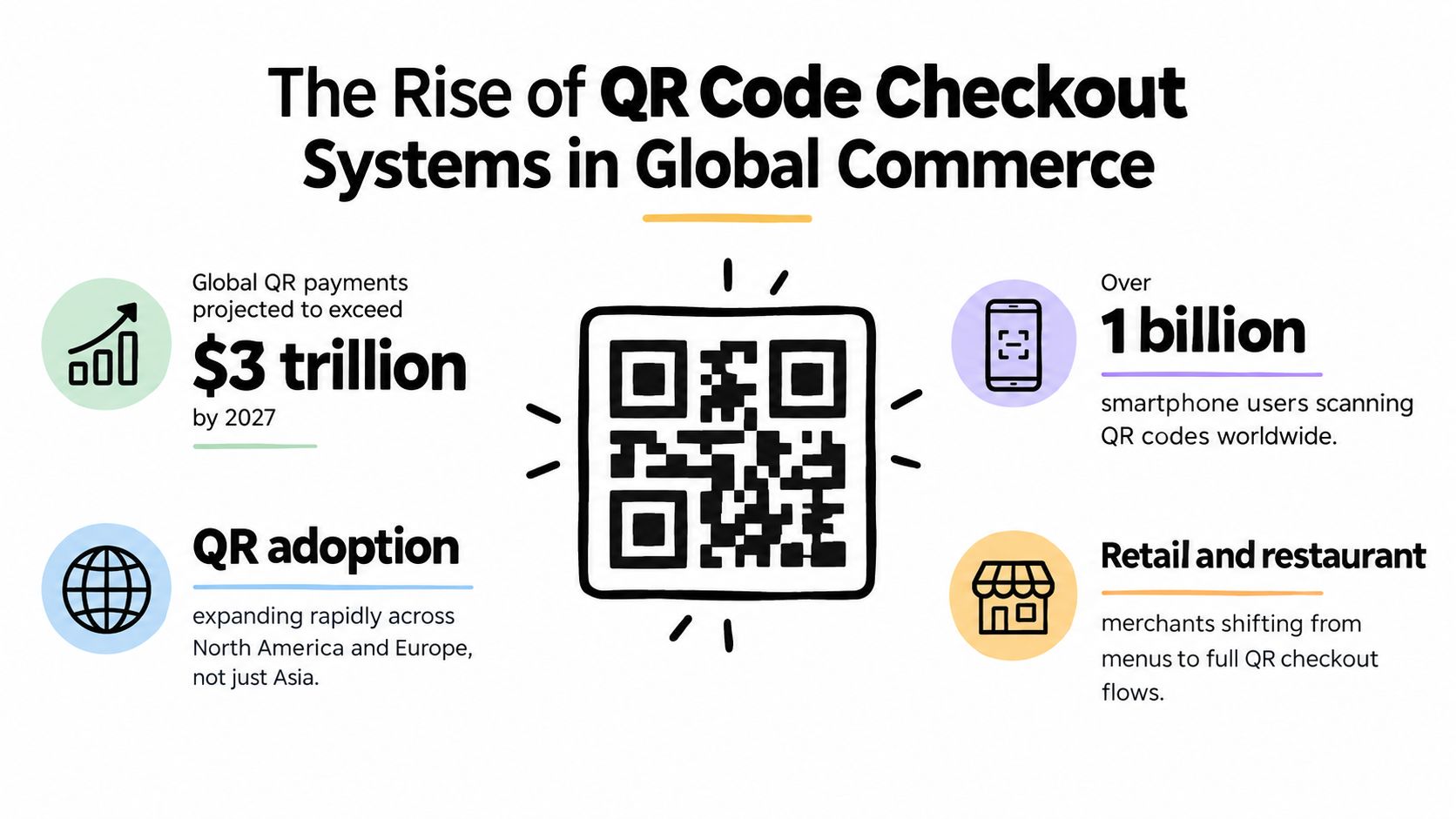
Those figures change the way merchants should think about the technology. QR codes aren't a temporary bridge between a physical store and a website. They provide a simple interface that connects a customer's phone to a payment rail, wallet, account, or hosted checkout. The code itself is visually modest, but the system behind it can support a complete commerce journey.
How mobile-first markets created the pattern
China's QR payment usage has remained strong since 2011, with Alipay and WeChat Pay helping QR payments become a major form of contactless payment. India's large digital payment facilitators began implementing QR functionality in 2016, while Singapore's standardized QR infrastructure had reached more than 239,000 merchants by September 2023, according to Juniper's overview of QR payment market expansion.
Brazil offers another example through Pix. The system had more than 160 million users and enabled 42 billion transactions in 2023, demonstrating how national payment rails can turn QR checkout from an optional feature into a familiar part of everyday commerce.
For a Shopify brand, the lesson isn't that every market behaves identically. The lesson is that customers already understand the scan-to-action pattern in many regions. A brand can use that pattern for payments, but also for subscription acquisition, account access, loyalty enrollment, and post-purchase support.
The opportunity beyond one-time payments
One-time retail checkout gets most of the attention because the flow is easy to describe: scan, pay, receive a receipt. Subscription commerce requires more thought. The code must lead to the right offer, preserve the selected plan, and connect the customer to a secure recurring billing flow.
That makes QR checkout useful for brands selling coffee, supplements, skincare, pet products, and other replenishable goods. A package insert can invite a customer to subscribe before the next order is needed. A market stall can offer a recurring delivery plan without asking the shopper to browse a full storefront. For additional campaign ideas that connect offline moments with digital actions, BonusQR's guide to QR marketing provides useful context.
Practical rule: Treat the QR code as the entrance to a designed customer journey, not as the journey itself.
Understanding How a QR Code Checkout System Works
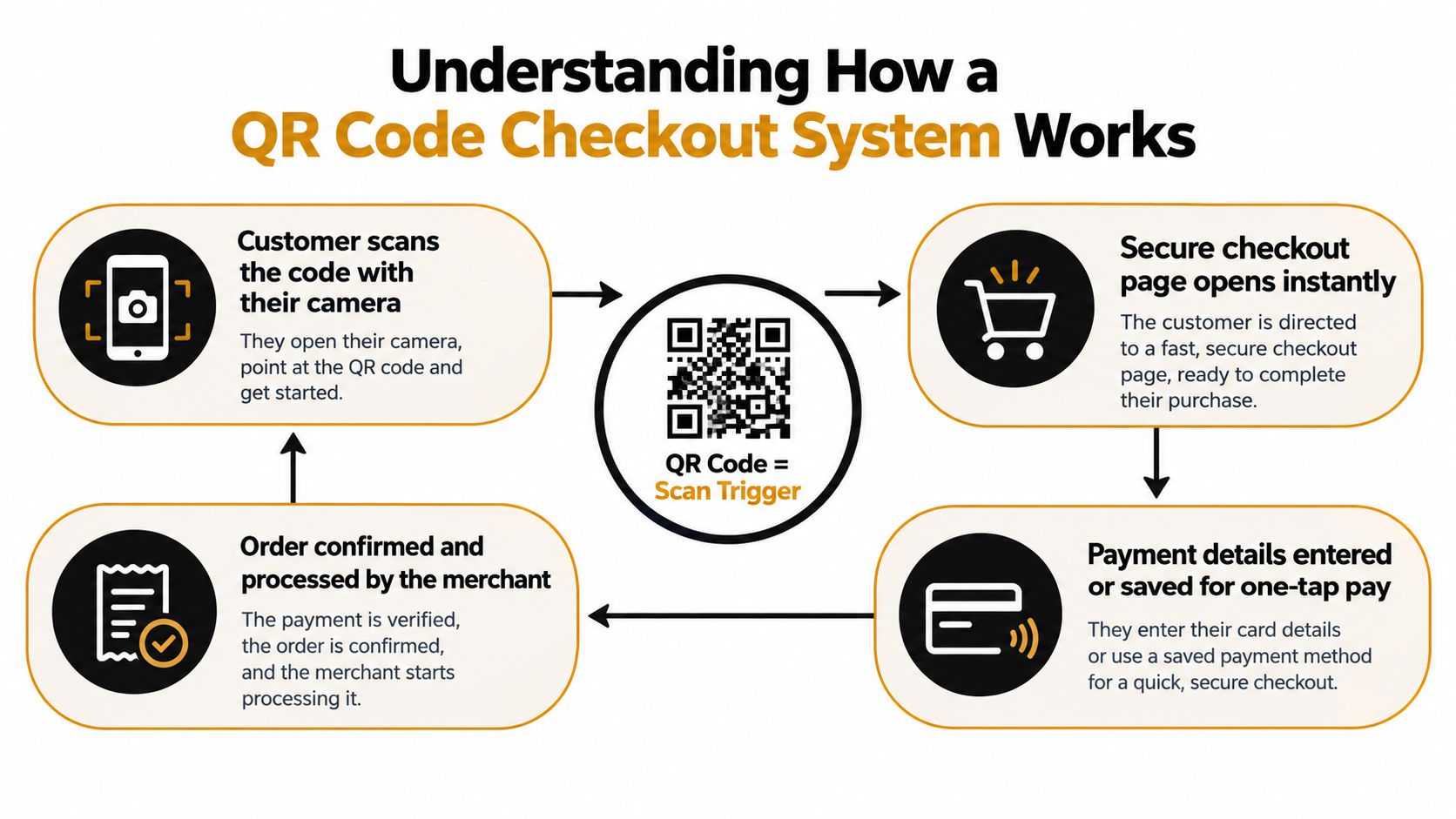
A QR code checkout system has two separate parts. The first is the scan trigger, which opens a destination on the customer's phone. The second is the commerce infrastructure, which handles product selection, customer identity, payment authorization, order creation, and any recurring billing agreement.
The QR symbol isn't a payment method. The card network, mobile wallet, or account-to-account provider authorizes the payment behind it. As Sambapay's explanation of QR payments illustrates, the customer experience may feel like one action, but several systems can operate after the scan.
Static and dynamic codes
A static QR code usually points to one fixed destination. It can work for a general landing page, but it creates governance problems when merchants print it on packaging, posters, or countertop displays. If the destination changes, the printed asset may become outdated. If somebody covers or replaces the code, the customer may be sent somewhere unsafe.
A dynamic QR code is created for a specific session, order, or campaign. It can be unique, time-limited, and connected to details such as an order ID or amount. That makes it more like a signed pointer to a payment session than a reusable payment credential.
The flow typically looks like this:
- The merchant creates a checkout session. The backend determines the product, plan, price, campaign, and customer context.
- The system generates a destination. The QR code points to a secure checkout URL rather than carrying payment details itself.
- The customer scans. A phone camera opens the intended checkout page.
- The payment provider authorizes the transaction. Tokenization can replace sensitive account information with transaction-specific tokens.
- The merchant confirms the order. The system records the purchase and, where applicable, creates the subscription agreement.
The secure version of this flow uses a verified backend, HTTPS, payload validation, and destination checks before authorization. The customer should never approve a payment if the amount, order, or destination has changed unexpectedly.
Bridging QR Scans with Subscription Commerce Success
A QR scan becomes commercially valuable when it captures a customer at the right moment and sends them to the right offer. For a subscription brand, that offer isn't always “buy this product.” It might be “receive this product every month,” “join the membership,” or “build a recurring box around your preferences.”
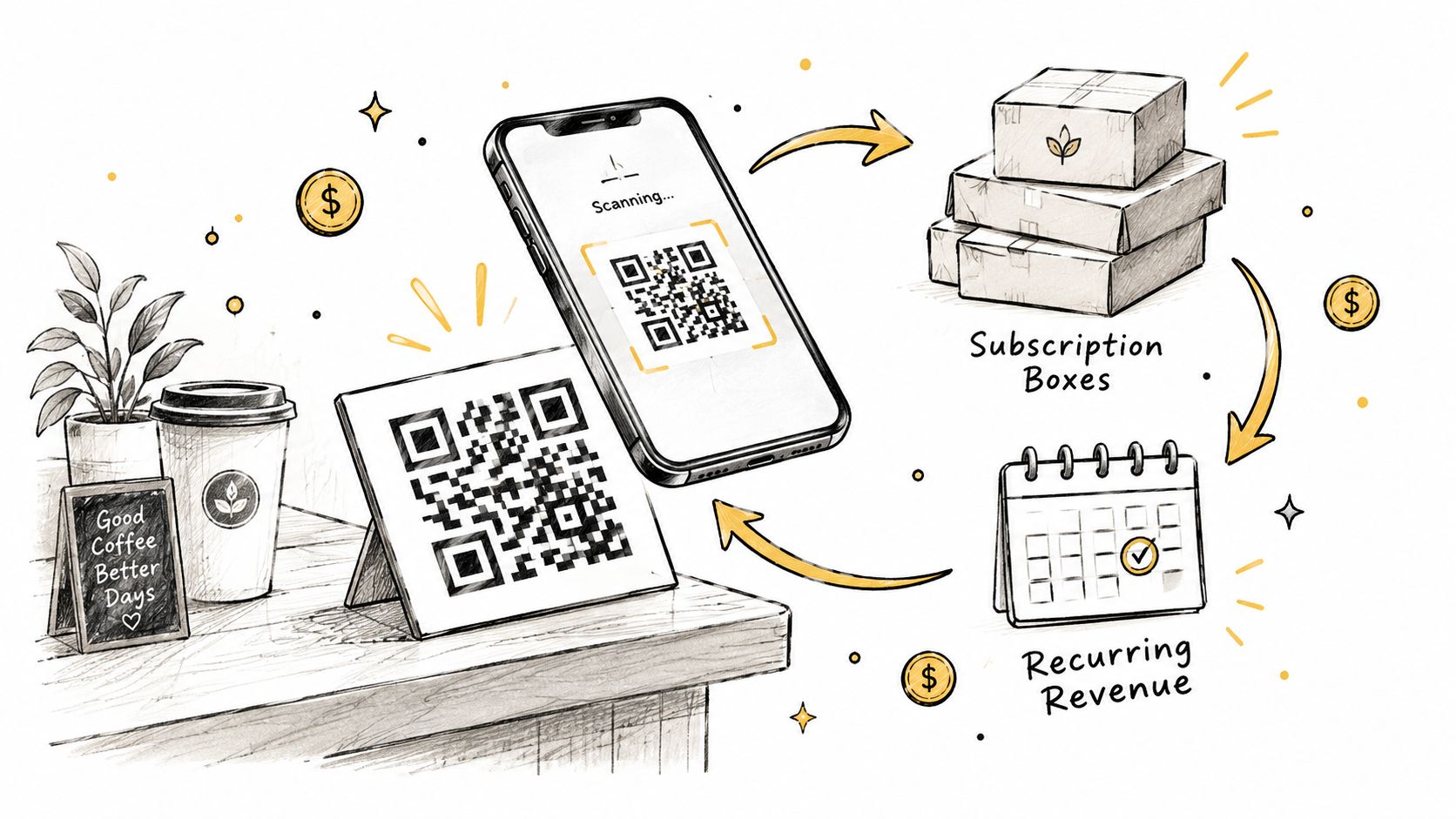
Consider a customer holding a newly delivered skincare product. A printed QR code on the insert can open a subscription offer for the same item, with the relevant delivery interval already selected. The customer doesn't need to remember the product name, search the store, or reconstruct the original purchase. The code serves as a shortcut from product experience to replenishment decision.
The scan is only the first conversion
Subscription acquisition has more steps than a one-time payment. The customer needs to understand the plan, see the billing terms, confirm the product and cadence, provide payment information, and know how to pause or change future orders.
A useful QR flow should therefore answer four questions quickly:
- What am I buying? Show the product or bundle clearly.
- What repeats? Display the delivery interval and recurring charge in plain language.
- What control do I have? Explain how the customer can pause, skip, swap, or cancel.
- What happens next? Confirm the first order and describe future billing.
A generic homepage makes the customer answer these questions alone. A direct subscription checkout gives the brand an opportunity to answer them in sequence, without surrounding navigation competing for attention.
The best QR subscription experience feels like a continuation of the customer's existing interaction with the product, not a detour into a separate sales funnel.
Connecting physical moments to recurring revenue
Packaging is one channel, but the same logic applies to retail displays, event cards, creator campaigns, and customer support messages. A coffee brand might place a code beside a sample station. A pet-care brand might print one on a reorder card. A membership brand might use one at a community event to open a tier-upgrade flow.
The important distinction is intent. A code on an acquisition poster may need an introductory offer and plan comparison. A code inside a customer's package may work better as a replenishment shortcut or account-management link.
Subscription teams can also use checkout links for campaign-specific flows to connect each placement with a defined destination. That structure helps the merchant separate a packaging journey from an event journey without forcing either audience through the main product page.
Integrating QR Checkouts into Shopify Subscription Flows
A Shopify subscription flow becomes easier to manage when the QR code points directly to a prepared checkout URL. The merchant selects the product and subscription configuration first, then turns that destination into a scannable asset for the campaign.
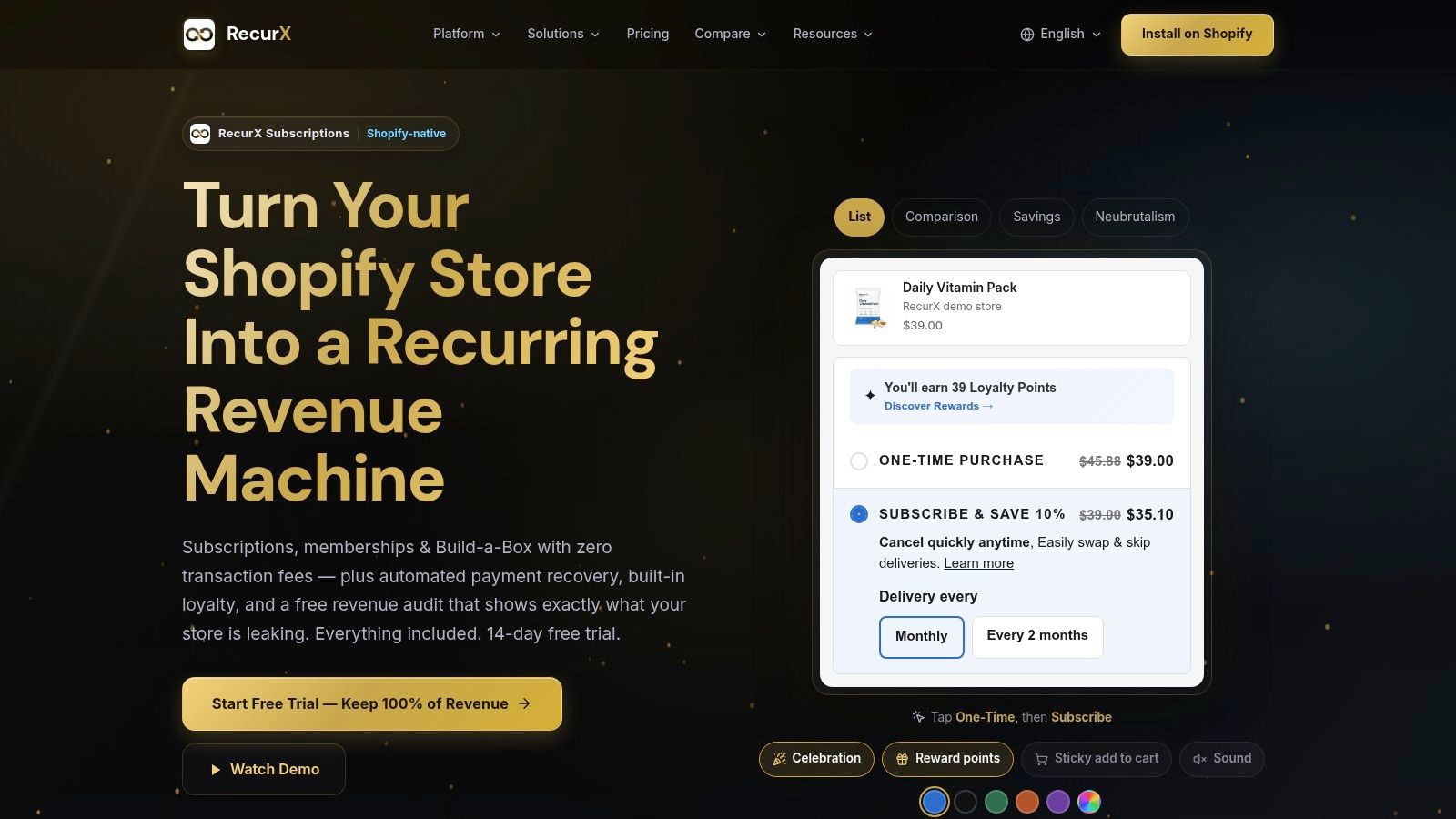
The Shopify-native subscription app described here supports pre-built subscription checkout URLs, including recurring plans, prepaid options, memberships, and Build-a-Box configurations. The customer can scan a campaign code and arrive at a checkout where the relevant offer is already selected, rather than starting from a general product page.
A practical setup sequence
Start with the commercial decision, not the QR image. Decide what the code should sell and which audience will scan it.
- Create the subscription offer. Choose the product, delivery frequency, pricing structure, trial, prepaid arrangement, membership, or bundle.
- Build the checkout link. Generate a URL with the product and plan already selected.
- Assign the link to a placement. Use separate destinations for packaging, retail signage, inserts, and creator campaigns when their audiences or offers differ.
- Generate the QR code. Add brand styling only when it preserves reliable scanning and clear contrast.
- Test the complete journey. Scan from the intended physical distance, check the plan details, complete the payment flow, and confirm the order in Shopify.
- Monitor the source. Use campaign-specific destinations or tracking parameters so the team can distinguish scans and purchases by placement.
By bypassing the product page, the link removes unnecessary choices. The customer still needs enough information to make an informed subscription decision, but they don't need to move through unrelated products, collection pages, or promotional banners.
For brands building a broader integration layer, Shopify subscription integrations and API workflows offer a useful reference point for understanding how subscription operations fit into the wider Shopify environment.
A short product walkthrough can help teams visualize the relationship between a prepared offer, a checkout URL, and a physical QR asset.
The operational advantage comes from keeping the customer experience inside the merchant's existing Shopify workflow. Orders, customer records, payment events, subscription changes, analytics, and support processes should remain connected instead of being split across unrelated systems.
Real-World Use Cases for QR-Driven Subscriptions
The strongest use cases share one trait: the customer already has a reason to engage. The QR code removes the search step and presents the next relevant action while interest is still fresh.
Product packaging and post-purchase onboarding
A customer receives a supplement, coffee shipment, or skincare product and sees a QR code beside a short message about replenishment. The destination can show the same product as a subscription, explain the delivery cadence, and provide a direct route to payment.
This placement works because the customer is already holding the product. It also supports a useful transition from trial to routine. Instead of sending the shopper back to a generic storefront, the brand can present the next logical purchase at the point of use.
Packaging can also support account management. A customer might scan to open a portal where they can pause, skip, swap, or change the frequency of a subscription. That reduces the need to search through old emails when a delivery needs to change.
Pop-ups, markets, and trade shows
Offline events create interest, but staff can't always explain every plan or complete every signup manually. A QR code on a counter card or event display can open a subscription checkout while the conversation is still happening.
The merchant can use a plan designed for the event, such as a recurring bundle or a prepaid offer. Staff can answer questions in person, while the customer completes the checkout on their own device. That division keeps the interaction human without turning the staff member into a payment operator.
The code still needs a reliable mobile destination. A QR symbol doesn't eliminate connectivity requirements, and the customer should see a clear confirmation after completing the flow.
Social and creator campaigns
A creator or brand can include a QR code in printed campaign material, event photography, livestream assets, or a bio landing page. The destination should match the creative message. If the campaign promotes a monthly box, the QR flow should open that box, not the entire subscription catalog.
QR codes in advertising can support this kind of campaign architecture by connecting a specific message with a specific destination. The same principle applies to influencer inserts and direct-mail campaigns. Each audience should encounter a checkout that reflects the promise that brought them there.
Loyalty upgrades and membership expansion
Existing customers are often more familiar with the brand than new prospects. A QR code in a loyalty email, shipment insert, or event badge can open a membership upgrade, a higher subscription tier, or a Build-a-Box configuration.
The flow should make the benefit concrete. Customers need to understand what changes when they upgrade, how future billing works, and whether their existing account or rewards balance remains connected. A direct path is helpful, but clarity matters more than speed if the customer is changing a recurring commitment.
Across all four examples, the QR code is a context-sensitive doorway. The merchant's job is to make sure the destination reflects the context rather than sending every scanner to the same generic page.
Security Considerations and Operational Governance
QR checkout has a low hardware requirement, but that doesn't make it risk-free. A printed code can be covered, replaced, or redirected, especially when it appears in a public place. The customer sees a familiar visual symbol, but may not know whether it still leads to the merchant's legitimate checkout.
Dynamic codes reduce avoidable exposure
Static codes are convenient for broad awareness campaigns, but they create lifecycle problems. If the offer changes, the code may continue sending customers to an outdated page. If the destination is editable through an unmanaged service, the merchant may not have sufficient control over where the scan leads.
Dynamic codes provide stronger operational options because the merchant can connect the scan to a controlled session, rotate destinations, expire old campaigns, and associate the interaction with a defined order or customer context. Recent market coverage reports that dynamic QR codes account for 64% of the QR payment market, citing flexibility and security as important reasons for their use. That figure is reported in Bitget's 2026 QR payment trends overview.
Security checkpoint: The code should identify a checkout session, not expose a reusable payment credential.
Governance belongs to the campaign owner
A brand should assign ownership for every active QR code. That includes the destination, campaign name, offer terms, expiry policy, printed locations, and person responsible for inspection.
Use these controls during deployment:
- Inspect physical placements: Check that public-facing codes haven't been covered or replaced.
- Prefer controlled destinations: Send scans to HTTPS checkout pages managed by the merchant or its trusted payment stack.
- Validate the payload: Confirm the product, amount, order identifier, and campaign context before authorization.
- Monitor transaction alerts: Investigate unexpected amounts, destinations, or bursts of failed activity.
- Retire old campaigns: Disable links that no longer match the printed offer.
- Test on real devices: Scan from the distance and lighting conditions customers will encounter.
Security also matters after the first payment. A subscription flow should protect payment details, authenticate the customer appropriately, and preserve clear controls for future billing. The QR code is only the entry point, so governance must continue through order confirmation, recurring payment handling, account changes, and support.
Abandonment deserves equal attention. Independent ecommerce coverage places cart abandonment at about 70.19%, as reported by QRStuff's retail and ecommerce discussion. That figure doesn't prove that QR codes reduce abandonment, and available market coverage focuses more on payment volume than on controlled checkout experiments. Merchants should therefore test QR subscription flows rather than assume that scanability automatically produces completion.
RecurX provides Shopify-native tools for subscription plans, memberships, bundles, payment recovery, customer self-service, analytics, and pre-built checkout links that can be converted into QR codes. Visit RecurX to connect physical and campaign placements with focused subscription checkout journeys.
qr code checkout system · subscription ecommerce · shopify subscriptions · omnichannel commerce · recurx
Keep reading
- Best Subscribe and Save Strategies for ShopifyDiscover the best subscribe and save strategies for Shopify. Compare native app features, fee structures, and retention tactics to maximize recurring revenue.
- Subscription Pay as You Go: A Shopify GuideLearn how subscription pay as you go works for Shopify stores. This guide covers pricing, benefits, and tips to boost your revenue.
- 8 Welcome Emails for New Clients That Drive RetentionExplore 8 welcome emails for new clients, with templates, subject lines, timing, and subscription examples that improve activation and retention.
Start growing recurring revenue on Shopify
RecurX has a 14-day free trial and zero transaction fees on every plan. Install in minutes.
Start your free trial →