Subscription Onboarding: How to Reduce First-Cycle Churn on Shopify
Most subscription businesses focus heavily on acquiring new subscribers and, once someone cancels, on win-back campaigns. The period in between — the onboarding window — is usually an afterthought. That is a costly gap: first-cycle churn, when subscribers cancel after one or two orders, is among the most wasteful churn a subscription business faces because acquisition cost is fully spent and the customer relationship has barely started. This guide covers the five-step onboarding sequence that closes that gap.
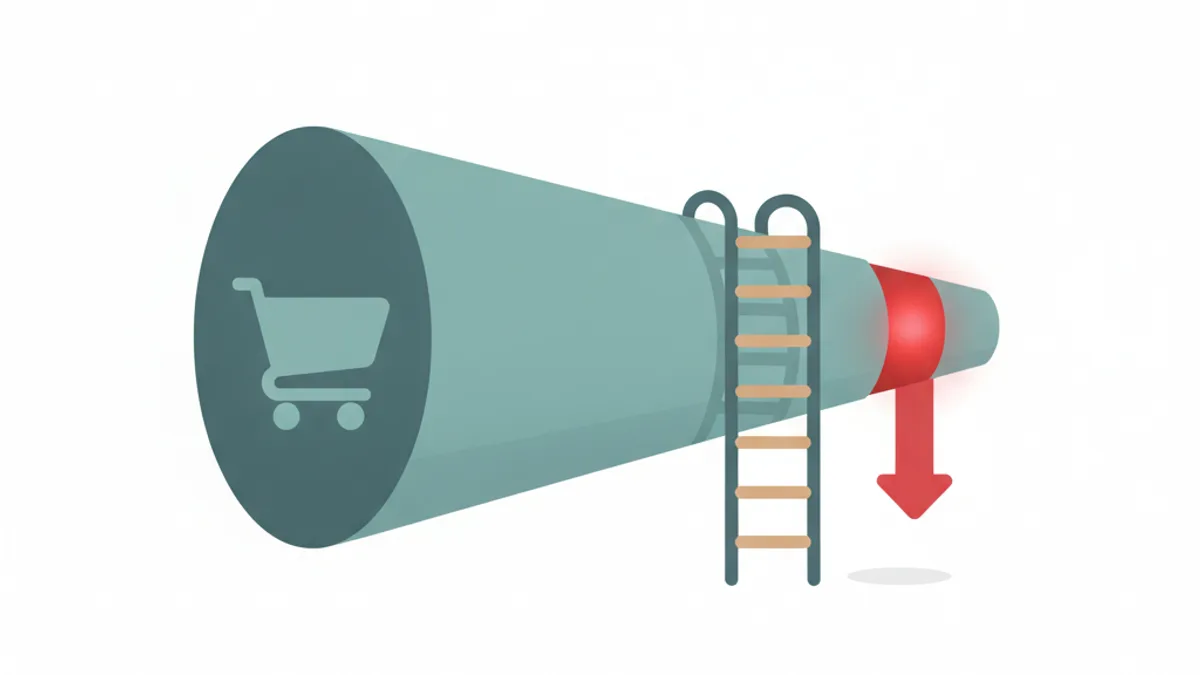
First-cycle churn is the most expensive churn because acquisition cost is already sunk. Fix it with five steps: (1) send a personalized welcome that sets clear expectations immediately after signup, (2) calibrate the delivery cadence to how fast the customer actually consumes the product, (3) make the first delivery exceptional, (4) check in 7 to 14 days post-delivery and surface the flexible controls subscribers need, and (5) re-state the value before the cycle-2 billing date. Measure success with 90-day retention rate and cycle-1 to cycle-2 conversion rate.
Why first-cycle churn is the most expensive churn
Churn in a subscription business is not uniform across a subscriber lifetime. Cohort retention analysis shows that cancellation risk is highest in the first one to three billing cycles and then declines as subscribers who stay long enough build a genuine repurchase habit. The subscribers who cancel in cycle one or two typically do so for one of three reasons: the value was not what they expected, the delivery frequency did not match their consumption rate, or they simply forgot they subscribed and the charge surprised them.
Each of these is an onboarding failure, not a product failure. The acquisition cost has been fully spent before the first order ships. Losing a subscriber after one order means paying for a customer who contributed nothing to lifetime value — and who may leave a negative review or dispute the charge if the cancellation experience involves friction. Reducing first-cycle churn by even a few percentage points compounds significantly across cohorts.
What subscription onboarding means in practice
Subscription onboarding is the deliberate sequence of communications and experiences designed from the moment someone subscribes through the end of their second or third billing cycle — the window when churn risk is highest and habit is forming. It is not a single welcome email. It spans email, packaging, the customer portal, and the moments just before and after each early billing event.
The goal is threefold: set accurate expectations so subscribers are not surprised, make the first delivery exceptional so the subscription feels worth keeping, and give subscribers the controls — pause, skip, frequency change — before they ever reach for the cancel button.
The 5-step onboarding sequence at a glance
Most first-cycle churn risk sits in the first 30 days. The five steps below cover that window end-to-end, from post-signup through the second billing event.
| Step | Timing | Goal |
|---|---|---|
| 1. Welcome and expectation-setting | Day 0 to 1 (immediately post-signup) | Confirm the subscription, set expectations, link to customer portal |
| 2. Cadence calibration | Before first order ships | Confirm delivery frequency matches consumption pace |
| 3. First delivery experience | On or just after first delivery | Turn a transaction into an experience; show the product value |
| 4. Early check-in | Days 7 to 14 post-first-delivery | Gather feedback, surface flexible controls, reduce accumulation risk |
| 5. Pre-billing value reminder | 3 to 5 days before cycle-2 billing | Re-state the value before the next charge to prevent surprise cancels |
Step 1: The welcome message
The welcome message is sent immediately after signup, before the first order ships. Its job is not to sell — the subscriber has already bought. Its job is to set accurate expectations: what they will receive, when, and how to manage their subscription if anything needs to change.
The most effective welcome messages include three things: a clear statement of what happens next (order processing timeline, expected delivery date, next billing date), a prominent link to the customer portal where the subscriber can pause, skip, or adjust their frequency, and one or two sentences about the value the subscription delivers each cycle.
Keep the welcome short. Subscribers scan rather than read. A clear subject line, three to four short paragraphs, and one prominent call to action — manage your subscription — will outperform a long-form narrative every time.
Step 2: Cadence calibration before the first delivery
The wrong delivery cadence is the most common driver of first-cycle voluntary churn. If the product arrives faster than the subscriber uses it, inventory accumulates, the subscriber feels wasteful, and cancellation follows. A coffee subscriber who takes six weeks to finish a bag should not be on a monthly plan; a supplement subscriber who skips doses should not be on a biweekly plan.
There are two practical fixes. The first is to ask at signup: a single post-purchase question — how often do you use this product? — takes seconds and places the subscriber on the right frequency from day one. The second is to make cadence changes effortless from the portal and mention that option explicitly in the welcome message. Subscribers who feel in control of their delivery frequency are far less likely to cancel than those who feel locked into a pace they cannot manage.
Step 3: Make the first delivery exceptional
The first delivery is the most influential moment in the onboarding sequence. It is the first tangible proof that the subscription is worth a recurring commitment. Brands that invest in the first-delivery experience — thoughtful packaging, a personal note, a product guide, or a small bonus inclusion — consistently see better first-cycle retention than brands that treat the first shipment as routine fulfillment.
The first delivery is also the moment to demonstrate product value directly. For consumable products, include clear usage instructions. For subscription boxes, include a note about what was curated and why. For functional products such as supplements or skincare, explain how to use them for the best result. Subscribers who understand how to get value from the product are less likely to decide, after a week, that it was not for them.
Pair the physical delivery with a triggered email sent when tracking status changes to delivered. A short message with a link to usage tips and a reminder of the portal is a low-effort touchpoint that meaningfully outperforms silence.
Step 4: The early check-in
One to two weeks after the first delivery, send a check-in. The goal is not to request a review — it is to ask how things are going and surface the flexible controls that prevent cancellation. A simple two-question message — how are you liking it, and did the delivery timing work for you — opens a feedback loop and signals that the brand is attentive.
This message is also the right place to remind subscribers proactively that they can pause, skip, or adjust frequency in their portal. Many early cancellations happen because subscribers feel their only option is to cancel — they never knew the pause button existed. Mentioning flexibility explicitly at the 7 to 14 day mark, before any dissatisfaction builds, has a measurable effect on early retention.
Step 5: The pre-billing value reminder
The second billing event is a high-risk moment. Subscribers on the fence often decide to cancel when they see an upcoming charge notification — not because they are unhappy, but because they have not been reminded why the subscription is worth keeping. A pre-billing reminder sent three to five days before the cycle-2 charge is the fix.
The message does two things. First, it tells the subscriber what is coming in their next order, so the charge feels connected to a concrete delivery rather than an abstract recurring fee. Second, it restates the value proposition in one or two sentences — the savings, the convenience, the curation. Framing the upcoming charge as "your next order is preparing" rather than "your card will be billed" shifts the subscriber from payment-thinking to product-thinking, which is a meaningfully better frame for retention.
If you offer a prepaid plan, the pre-billing message is a natural place to mention it. Switching to a prepaid multi-order plan removes the monthly billing decision entirely, which is one of the most reliable ways to extend subscriber tenure.
How to measure onboarding success
Two metrics tell you whether onboarding is working. The first is cycle-1 to cycle-2 conversion rate: the percentage of new subscribers who complete their second billing cycle. If this number is significantly lower than your average monthly retention rate, the problem is in onboarding specifically. The second is 90-day retention rate: the percentage of a cohort still active 90 days after signup, capturing the full first-cycle risk window.
Track both by acquisition cohort — the group of subscribers who signed up in the same week or month. Cohort tracking reveals whether onboarding improvements show up in retention over time and whether specific acquisition channels produce subscribers with better or worse early retention. A channel that drives high signup volume but poor 90-day retention may look strong on acquisition reports while quietly degrading lifetime value.
| Metric | How to calculate | What a low number signals |
|---|---|---|
| Cycle-1 to cycle-2 conversion | Subscribers reaching cycle 2 divided by total new subscribers | Onboarding failure: expectation mismatch, wrong cadence, or weak first delivery |
| 90-day retention rate | Subscribers still active at day 90 divided by cohort size at signup | Broad early-churn problem spanning multiple onboarding steps |
| Portal engagement rate (first 30 days) | Subscribers visiting portal in first 30 days divided by new subscribers | Low awareness of flexible controls; update welcome message and check-in |
Frequently asked questions
When does subscription onboarding end?
There is no universal cutoff, but the highest-risk onboarding window is the first 90 days or first three billing cycles — the period when cancellation risk is highest and the subscriber is deciding whether to form a long-term habit. By the end of that window, subscribers who remain are meaningfully more likely to stay active long-term.
What is the most common cause of first-cycle subscription churn?
Delivery cadence mismatch is the most common driver: the product arrives faster than the subscriber uses it, creating inventory accumulation and a sense of waste. A close second is a weak or absent welcome sequence that leaves subscribers unclear about what they signed up for and how to manage their subscription. Both are fixable with deliberate onboarding.
How many emails should a subscription onboarding sequence include?
A minimum viable sequence has three emails: a welcome message at signup, a delivery notification or check-in after the first order, and a pre-billing reminder before the second charge. Adding a cadence-calibration prompt before the first delivery and a mid-cycle value reinforcement message fills out a stronger five-email sequence without overwhelming subscribers.
Mo Boumzoud — Founder, RecurX. Mo is the founder of RecurX and writes about subscription commerce, retention, and growth for Shopify merchants. RecurX powers subscriptions for direct-to-consumer brands.
Keep reading
- 15 Customer Retention Strategies for Ecommerce (2026)15 proven, practical retention strategies for ecommerce and subscription brands — ordered by return on effort, with the tactics that actually move churn.
- Failed Payment Recovery for Shopify Subscriptions: The Dunning PlaybookFailed payments are often the biggest source of preventable revenue loss in any subscription business. This is the complete playbook: retry logic, email sequences, pre-dunning, and account updaters.
Start growing recurring revenue on Shopify
RecurX has a free-forever plan and zero transaction fees on every tier. Install in minutes.
Install RecurX free →