Subscription Cancellation Flow: How to Save Subscribers Before They Cancel
For most Shopify subscription stores, the cancel button is a single click that ends the relationship instantly — no offer, no question, no pause option. A well-designed cancellation flow changes that. It gives subscribers who are wavering a reason to stay, captures the reason code from those who do not, and hands off to a win-back sequence for those who cancel anyway. This guide covers how to build a cancellation flow that meaningfully improves your save rate without creating friction that damages trust.
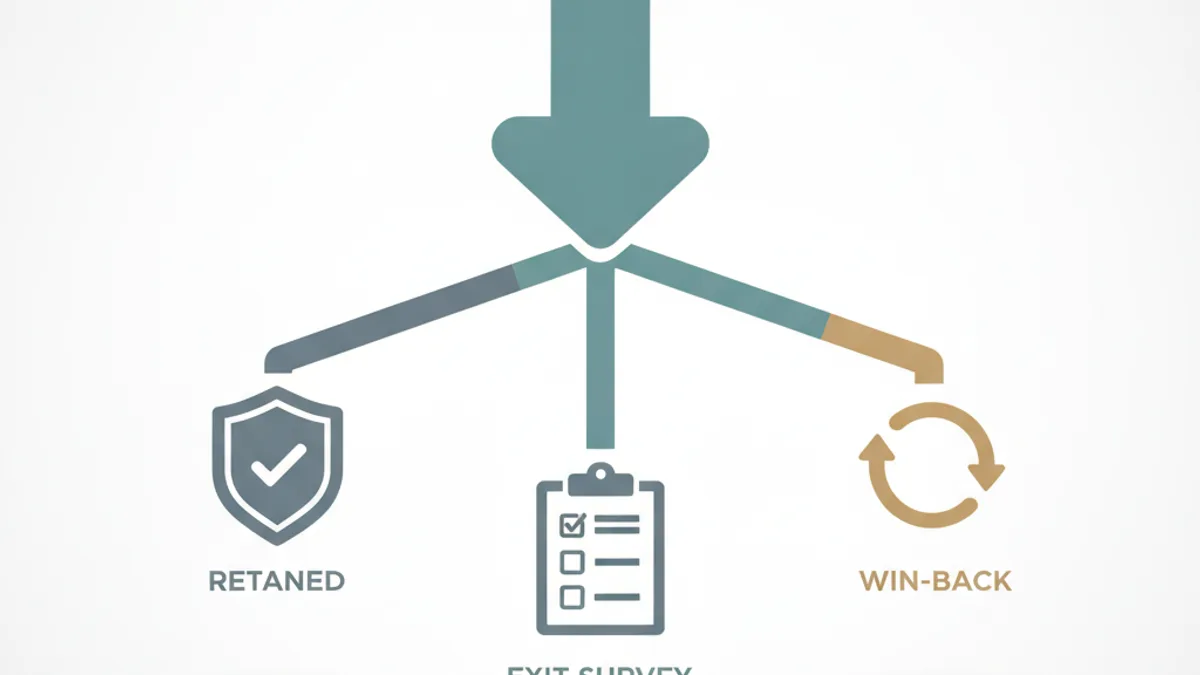
A subscription cancellation flow intercepts cancel intent with a reason survey and a matched save offer — usually a pause, skip, frequency reduction, or discount. Ask the reason first, then surface the offer that addresses it. Track save rate: saves divided by cancel attempts. A well-implemented flow saves 20–35% of cancel attempts in consumer subscriptions. Always let subscribers cancel cleanly if they still want to — manipulative friction drives disputes and negative reviews, not retention.
Why the cancel button is a missed retention opportunity
Most subscription cancel flows were designed to make cancellation easy, not to make retention possible. The result is that a large share of subscriptions end for entirely preventable reasons: a subscriber who is travelling and stacking up product gets no pause offer; one who thinks the cadence is too fast gets no frequency-change option; one who is price-sensitive gets no skip or discount. An immediate cancel button ends those relationships silently, with no data and no save attempt.
The case for a cancellation flow is not about making cancellation hard. Dark patterns — hidden cancel buttons, mandatory phone calls, guilt-trip copy — damage trust, invite chargebacks, and violate Shopify's terms of service. The case is simply about giving wavering subscribers a better path than leaving (the baseline every store must meet is covered in how to cancel a Shopify subscription). The reason data collected along the way is also valuable: a single quarter of cancellation-reason data will reliably surface your most common churn drivers, many of which can be fixed upstream at the product or billing level.
The anatomy of an effective cancellation flow
An effective cancellation flow has three steps, and they should run in this order. Skipping straight to an offer without first understanding why the subscriber is leaving means surfacing irrelevant offers that fail to convert and feel pushy.
- Step 1 — Reason survey: Ask why they are cancelling. Use 4–6 specific options rather than a generic text field. Common choices: too much product piling up, not using it enough, too expensive, pausing for a while, switching to a different product, other. This step alone is worth implementing even if you offer nothing else — it generates the data to fix churn at the source.
- Step 2 — Matched save offer: Surface the offer that addresses the declared reason. Too much product → frequency reduction or a skip. Too expensive → a one-time discount or a lower-tier swap. Pausing for a while → a pause for 4–12 weeks. Not using it → a product swap or a usage tip email. The match between reason and offer is what makes the flow feel helpful rather than desperate.
- Step 3 — Confirmation or acceptance: If the subscriber accepts the save offer, confirm the change and close the loop positively. If they decline, let them cancel with a single clear confirmation click. No second offer, no countdown timer, no guilt-based copy. A clean exit respects the subscriber and preserves the relationship for a future win-back.
The four save offers
These four offers handle the majority of cancellation intents in consumer subscription businesses. The key is matching the offer to the reason, not broadcasting a single offer at every subscriber.
| Save offer | Best-matched cancel reason | Notes |
|---|---|---|
| Pause subscription | Travelling, taking a break, need a temporary stop | Offer 4, 6, 8, or 12-week options. Paused subscribers reactivate at a significantly higher rate than cancelled subscribers. |
| Skip next order | Too much product, already stocked up | The lowest-friction option — no change to the subscription plan, just one deferred charge. Typically the highest acceptance rate of the four offers. |
| Reduce frequency | Product arrives too often, consuming more slowly than expected | Moving from monthly to every 6 or 8 weeks addresses the root cause of pile-up churn rather than just deferring it. |
| Discount on next order | Too expensive, temporary budget pressure | A one-time or two-order discount works better than a permanent price reduction. Use sparingly — habitual discounting can condition subscribers to wait for a retention offer before they cancel. |
Cancellation reason surveys: capturing and using the data
The reason survey serves two purposes simultaneously: it tells the flow which save offer to serve, and it generates insight data that persists long after any individual save attempt. The reason codes collected over 90 days almost always cluster around two or three dominant drivers — and those clusters tell you where to invest retention resources.
If 40% of cancellation reasons are frequency-related (too much product, arrives too often), that points to a cadence mismatch fixable at the product-configuration level, not just in the cancel flow. If 30% cite price, that is a perceived-value signal about the subscription itself, not only willingness-to-pay at a moment of friction. Use the data to fix the upstream problem so the cancel flow is no longer the last line of defence.
Keep the survey to 4–6 options. More choices increase friction without improving data quality. Include an "other" option with an optional short text field to capture signals your fixed options miss. Review the distribution monthly and update the reason options as your subscriber mix changes over time.
Timing and placement
The cancellation flow should be triggered when a subscriber clicks a cancel button inside the customer portal. It should not be an email sequence that fires when a subscriber has not visited in a while, or a pop-up that appears without any cancel intent being expressed — that is pre-emptive and feels intrusive.
Keep the entire flow to one page or one modal. Every additional step between intent and a decision point is potential frustration. A reason survey and a single matched offer fit comfortably on one screen. If the subscriber declines the save offer, the cancel confirmation should be one click.
Design for mobile first. A significant share of customer portal visits happen on mobile for most consumer subscription brands. Large tap targets, short copy, and no overlapping pop-ups make the difference between a flow that converts and one that frustrates.
What to do immediately after a cancellation
When a subscriber cancels despite the save attempt, the relationship is not over — it is in a holding pattern. The tone of what happens next begins with how the cancellation itself is confirmed.
Confirm the cancellation clearly and without guilt. Acknowledge the cancellation, state the last order or billing date, and note any loyalty balance or prepaid credit that will remain available for a set period. Close with a single low-pressure reactivation link — not a paragraph of copy, just a button.
Thirty days after cancellation, trigger the first win-back email. The most effective win-back messages reference the reason the subscriber provided at cancellation: a subscriber who cited price gets a welcome-back discount; one who paused for a trip gets a clean reactivation link. For a full playbook, see the subscription win-back campaigns guide.
Cancellation flow examples
Three example flows, matched to the most common cancellation reasons:
- "Too much product" (coffee/supplements brand): subscriber clicks cancel → one-question survey → selects "I have too much" → flow offers "Skip your next delivery" and "Ship every 6 weeks instead of 4" before any discount. This is the highest-converting pattern because it fixes the actual problem — accumulation — without giving up margin.
- "Too expensive" (beauty/skincare brand): reason survey → selects price → flow shows a one-time 20% discount on the next renewal OR a downgrade to a smaller size at a lower price point. The downgrade option keeps the subscriber at sustainable economics instead of training them to cancel for discounts.
- "Just taking a break" (pet or food brand): reason survey → selects break/travel → flow offers a 1-, 2-, or 3-month pause with a clearly-stated resume date and a one-click "resume early" link. A pause keeps the payment method and relationship alive; a large share of paused subscribers resume without any further offer.
In every example the exit remains honest: a subscriber who declines the offer completes cancellation in one more click, gets a confirmation, and enters the win-back sequence later. Hiding the cancel button behind extra steps raises short-term saves and long-term chargebacks.
Measuring your save rate
Save rate is the primary metric for a cancellation flow: the percentage of cancel attempts that end with the subscriber staying, either through a save offer or a pause. Calculate it as saves divided by cancel attempts, expressed as a percentage. A pause that keeps the subscription open counts as a save — the subscriber is still in the relationship.
| Metric | What it measures | What to aim for |
|---|---|---|
| Overall save rate | Cancel attempts that result in the subscriber staying | 20–35% for well-implemented consumer subscription flows |
| Save rate by reason | How often each save offer converts the subscriber it is matched to | Pause offers typically convert at 35–50%; discount offers vary by margin and audience |
| Post-save churn rate | How often "saved" subscribers cancel within 60 days anyway | High post-save churn signals the offer deferred the problem rather than resolving it |
| Reason code distribution | Share of cancellations attributed to each reason code | Use to identify and fix the upstream product, pricing, or cadence issue driving the top reason |
Frequently asked questions
What is a subscription cancellation flow?
A cancellation flow is the sequence a subscriber goes through after clicking "cancel": typically a one-question reason survey, a save offer matched to that reason (pause, skip, frequency change, or discount), and — if they decline — a clean, honest exit. Its purpose is to resolve fixable problems like product accumulation or price sensitivity instead of losing the subscriber outright.
What is a subscriber save rate?
Save rate is the percentage of cancel attempts that result in the subscriber staying — through a save offer or a pause — rather than completing the cancellation. A save rate of 20–35% is achievable for most consumer subscriptions with a well-designed flow. Track it monthly, and measure it separately for each save offer type to understand which offers convert best for your audience.
What is the most effective save offer in a subscription cancellation flow?
Pause offers consistently convert at the highest rate because they address the most common cancel intent: a subscriber who needs a break but is not dissatisfied with the product. A paused subscriber reactivates at a far higher rate than one who cancels outright. Frequency reductions are the second-most effective option when the stated reason is product pile-up. Discount offers convert well for price-sensitive cancellations but should be used carefully to avoid conditioning subscribers to expect them.
How do I add a cancellation flow to my Shopify subscription?
Most Shopify subscription apps include a customer portal where you can configure a cancellation flow — enabling a reason survey and mapping each reason to a specific save action such as pause, skip, or discount. In RecurX, the cancellation flow is built into the portal settings: enable the cancel survey, assign a save offer to each reason code, and set the pause duration or discount amount from the dashboard.
Mo Boumzoud — Founder, RecurX. Mo is the founder of RecurX and writes about subscription commerce, retention, and growth for Shopify merchants. RecurX powers subscriptions for direct-to-consumer brands.
Keep reading
- 15 Customer Retention Strategies for Ecommerce (2026)15 proven, practical retention strategies for ecommerce and subscription brands — ordered by return on effort, with the tactics that actually move churn.
- Subscription Win-Back Campaigns: How to Re-engage Cancelled SubscribersCancelled subscribers are warm leads, not lost causes. This win-back playbook covers timing, segmentation, email sequences, and the offers that convert lapsed subscribers back into active ones.
Start growing recurring revenue on Shopify
RecurX has a free-forever plan and zero transaction fees on every tier. Install in minutes.
Install RecurX free →